

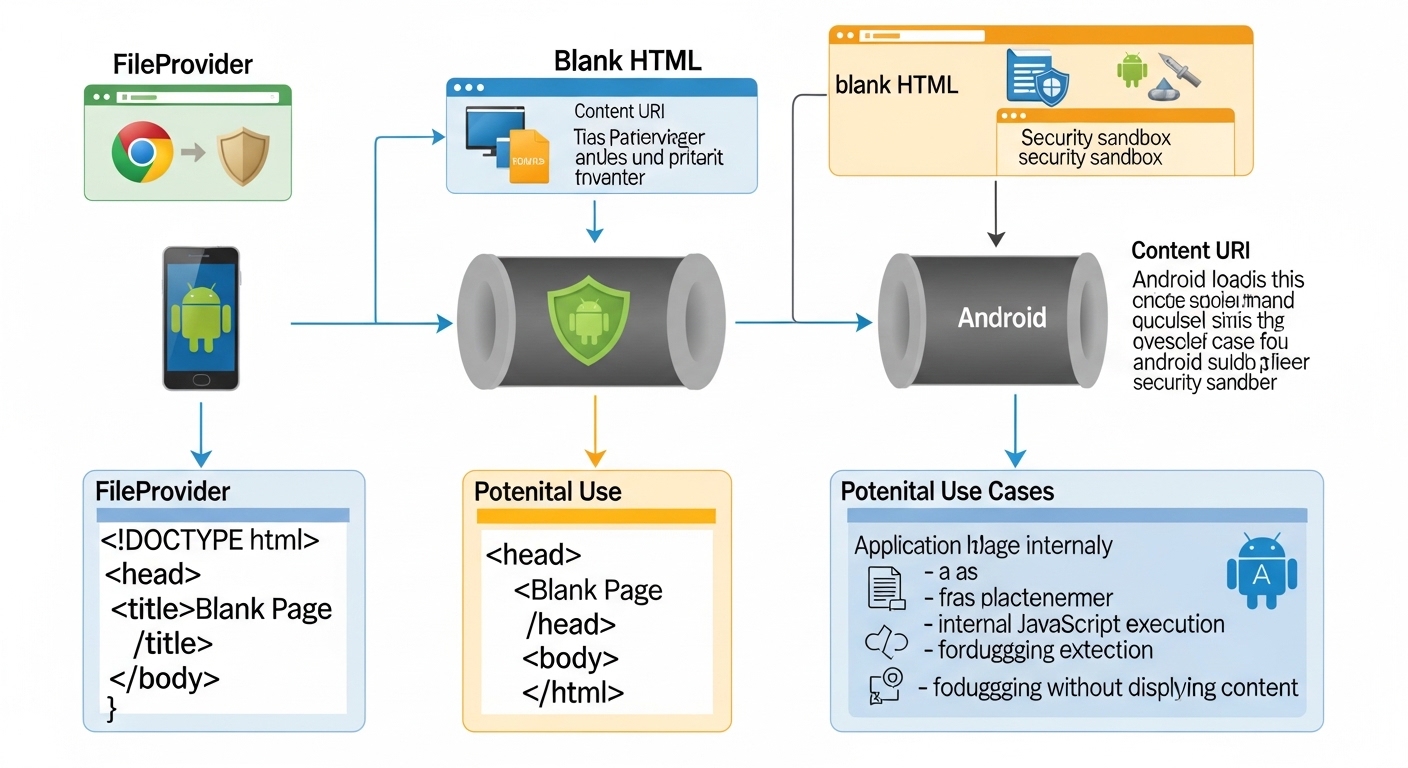
You probably saw content://cz.mobilesoft.appblock.fileprovider/cache/blank.html pop up somewhere and thought, wait… what even is this thing and why is it on my phone, right? It feels a bit off, almost like something sneaky slipped in, but also… not quite malware-ish either. That weird middle ground is what makes it confusing.
Let’s actually unpack it, slowly, in a way that makes sense without sounding like a robotic manual nobody reads anyway.
What Does content://cz.mobilesoft.appblock.fileprovider/cache/blank.html Mean?
At first glance, yeah, it looks like a broken URL. But it’s not exactly a website link you’d open in Chrome or something. It’s more of an internal Android system path, and those behave a bit differently than normal links you click.
Here’s the breakdown, not too stiff about it:
- content:// → This tells Android “hey, this is a content provider path”
- cz.mobilesoft.appblock → That’s the app package name (AppBlock, basically)
- fileprovider → A secure way apps share files internally
- cache/blank.html → A temporary file, usually empty or placeholder content
So in plain-ish language, this whole string is just pointing to a cached blank HTML file created by the AppBlock app. Nothing dramatic… most of the time.
But yeah, I get it, seeing “blank.html” kinda makes you think something failed or glitched.
Why You’re Seeing This on Your Device
This is where people start worrying a bit, and fair enough. You don’t expect random file paths to show up in your daily phone use.
Usually, this appears because of one of these situations:
1. AppBlock Is Doing Its Job (Sort of)
AppBlock is designed to block distracting apps or websites. When it blocks something, it sometimes redirects you to a blank page instead of the actual content.
That “blank.html” is literally that empty page.
You tried to open something → AppBlock said nope → it showed a blank file instead.
Simple, but feels weird if you didn’t know.
2. A Blocked Website Triggered It
If you tried visiting a site that’s restricted, AppBlock may intercept it and serve this cached blank page instead.
That’s when the content://cz.mobilesoft.appblock.fileprovider/cache/blank.html shows up.
Kind of like a silent “access denied,” but without the message.
3. Temporary Cache Glitch
Sometimes, it’s not even intentional blocking. It’s just:
- App didn’t load properly
- Cache got messy
- Something timed out
And boom, you’re staring at a blank placeholder.
Not dangerous, just… annoying.
Is content://cz.mobilesoft.appblock.fileprovider/cache/blank.html Safe?

Short answer: yeah, it’s safe.
Longer, slightly more honest answer: it’s safe as long as you recognize the app behind it, which in this case is AppBlock.
This path is:
- Not a virus
- Not spyware
- Not a hacker’s backdoor
It’s just an internal Android mechanism doing its slightly awkward thing.
But, and this is important, if you see similar-looking paths from apps you don’t recognize, then maybe pause a second and check.
When Should You Actually Worry?
Okay, let’s not pretend everything is always fine. There are edge cases.
You might want to double-check things if:
- You don’t remember installing AppBlock
- The message appears constantly, even when you’re not blocking anything
- Your phone is behaving oddly (battery drain, random popups, etc.)
In those cases, it’s not the content://cz.mobilesoft.appblock.fileprovider/cache/blank.html itself that’s dangerous, but it might be a symptom of something misconfigured.
Still, 9 times out of 10, it’s harmless.
How to Fix or Stop Seeing This
If it’s bothering you (which, yeah, it can), here are some ways to deal with it.
Option 1: Check AppBlock Settings
Open AppBlock and look at:
- Active blocking rules
- Scheduled restrictions
- Website filters
You might find something is being blocked without you realizing it.
Honestly happens more than people admit.
Option 2: Clear Cache
This is the classic fix, and it still works more often than you’d expect.
Steps:
- Go to Settings
- Apps
- AppBlock
- Storage
- Tap “Clear Cache”
Not “Clear Data” unless you’re okay resetting everything.
Option 3: Disable or Uninstall AppBlock
If you’re not using it anymore, just remove it.
That will stop the content path from appearing altogether.
But yeah, obvious trade-off, you lose the blocking features too.
Option 4: Update the App
Sometimes the issue is just a bug.
Updating AppBlock can fix:
- Broken redirects
- Cache handling issues
- Weird blank page loops
It’s one of those “simple but people forget” things.
Real-World Example (Because This Stuff Feels Abstract Otherwise)
Let’s say you set AppBlock to block social media during work hours.
You open a browser and try to visit a site like:
Instead of showing a “blocked” message, AppBlock quietly redirects you to:
content://cz.mobilesoft.appblock.fileprovider/cache/blank.html
And you just see… nothing.
No explanation, just a blank screen.
You’d probably think your internet died or the page broke. But nope, it’s just the blocker doing its thing, kinda silently.
Why It Looks So Technical (And Slightly Suspicious)
Android uses these “content://” URIs for internal file sharing between apps.
They’re not meant for users to see, honestly. But sometimes they leak into view because:
- Apps don’t handle redirects cleanly
- Debug-style outputs slip through
- UI doesn’t replace them with friendly messages
So what you’re seeing is basically a behind-the-scenes address that wasn’t meant to be seen.
Feels like peeking into a system’s wiring panel when you just wanted to turn on a light.
Quick Comparison: Normal URL vs Content URI
| Feature | Normal URL (https://) | content:// URI |
|---|---|---|
| Visible to users | Yes | Not usually |
| Used for web | Yes | No |
| Used by apps | Rarely | Very common |
| Editable by user | Yes | No |
| Security scope | Public | App-restricted |
This kinda helps explain why it feels “wrong” when you see it.
Common Misconceptions
Let’s clear a few things up, because there’s a lot of guesswork online about this.
“It’s a virus”
No, it’s not. There’s no malicious code in a blank cached HTML file.
“Someone hacked my phone”
Also no. This isn’t remote access or anything like that.
“It’s a broken system file”
Not really. It’s working as intended, just not presented nicely.
“I need to factory reset”
Way too extreme. You really don’t need to go that far for this.
A Slightly Odd Detail You Might Notice
Sometimes the blank page isn’t completely blank. You might see:
- A white screen
- A loading spinner that never finishes
- A flash of content before it disappears
That’s usually just the app trying (and failing a bit) to render something before switching to the blank cache file.
Not dangerous, just… messy behavior.
How Developers Actually Use This
This part is kinda interesting if you think about it.
Apps like AppBlock use file providers to:
- Share temporary files securely
- Avoid exposing file paths directly
- Control access permissions
The blank.html file is often just a placeholder used when:
- Content is blocked
- No valid data is available
- A fallback is needed quickly
It’s not elegant, but it’s practical.
Read this Blog: https://celebobservers.com/janet-smollett/
Final Thoughts That Might Make It Click
So yeah, that long string — content://cz.mobilesoft.appblock.fileprovider/cache/blank.html — isn’t something you need to panic about. It’s more like catching a glimpse of something that usually stays hidden.
If anything, it tells you:
- AppBlock is active
- Something got blocked or redirected
- The app didn’t bother explaining itself properly
A bit rude, maybe, but not harmful.
If it keeps showing up and annoys you, tweak your settings or clear the cache. If it appears once in a while, you can honestly just ignore it and move on.
And yeah, next time you see something that looks like a system path, don’t assume the worst straight away. Sometimes it’s just your phone being… a little too honest about what it’s doing behind the scenes.
