

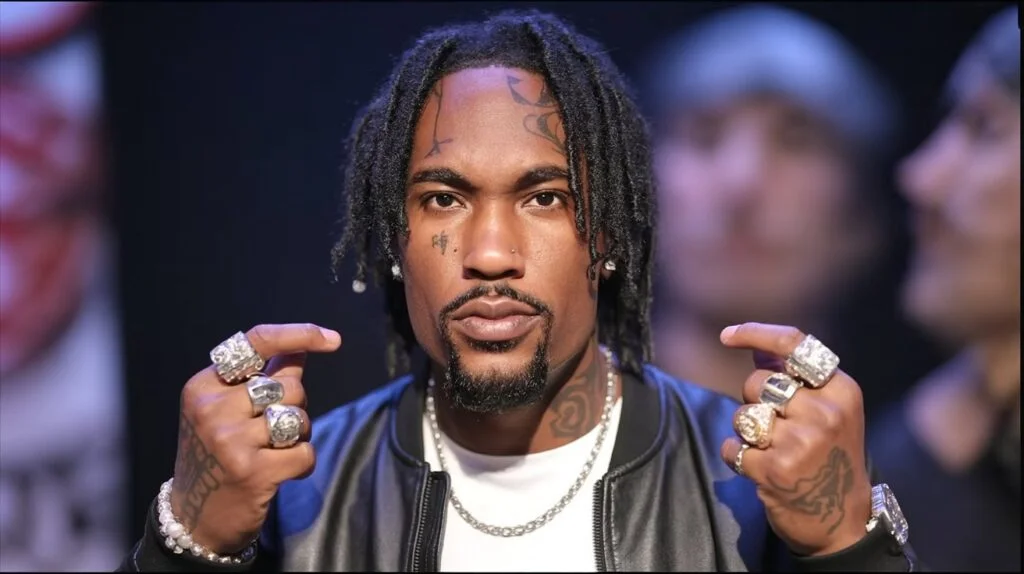
When you first hear about Hunxho age trending across social media and search engines, you might wonder what’s driving all the curiosity. The answer is simple yet fascinating: fans are captivated by an artist who sounds decades older than his actual years. At just 26 years old, Hunxho has already accumulated achievements that many rappers spend their entire careers chasing. His mature lyricism, emotional depth, and street storytelling have created a disconnect between what listeners perceive as his experience level and what his birth certificate actually says. In this comprehensive guide, we’ll explore everything about Hunxho’s age, his birthday, career trajectory, personal life, and financial success—giving you the complete picture of why this East Atlanta rapper has become such a compelling figure in modern hip-hop.
Who Is Hunxho? Understanding the Man Behind the Stage Name
Hunxho, whose real name is Ibrahim Muhammad Dodo, represents a new generation of rappers who’ve grown up with social media, streaming platforms, and instant global connectivity. Born on June 20, 1999, in Greensboro, North Carolina, he’s currently 26 years old as of 2026—though the way he carries himself and crafts his narratives often suggests someone with considerably more life experience.
The stage name “Hunxho” is pronounced similarly to “Huncho,” a slang term deeply embedded in rap culture that denotes leadership, authority, and someone who runs things. It’s a fitting moniker for an artist who, despite his youth, commands respect and attention in every room. His real identity, Ibrahim Muhammad Dodo, carries significant cultural weight. Growing up in a household with a Nigerian father and an African-American mother, Hunxho developed a worldview that transcends typical American rap narratives. This multicultural background infuses his music with themes of discipline, responsibility, faith, and familial obligation—elements that resonate powerfully with listeners across demographic lines.
What’s particularly interesting about Hunxho’s identity is how he’s managed to straddle two distinct geographic identities without losing authenticity. Though he was technically born in Greensboro, his formative years, artistic inspiration, and professional identity are intrinsically linked to East Atlanta, Georgia. That distinction matters more than it might initially seem, because Atlanta isn’t just where he grew up—it’s the epicenter of modern hip-hop culture, a place that shaped his sound, his values, and his artistic vision in ways that have become foundational to his brand.
Hunxho’s Age and Birthday: Why It Matters More Than You Think
Let’s address the primary question head-on: Hunxho is 26 years old, born on June 20, 1999. This means he turned 25 in 2024, 26 in 2025, and remains 26 as we move through 2026. But here’s where it gets interesting—and this is what drives much of the curiosity around “Hunxho age“—his chronological age seems almost irrelevant when you listen to his music.
The fascination with his age stems from a genuine discrepancy between expectation and reality. Most artists who speak with such gravitas about loyalty, betrayal, fatherhood, faith, and life’s harsh realities typically have more years under their belt. Yet Hunxho achieved this emotional and artistic maturity while still in his mid-twenties, which fundamentally changes how we perceive his accomplishments. When you learn that the person crafting verses about navigating East Atlanta’s street complexities, raising children, and maintaining spiritual discipline is only 26, the respect factor multiplies exponentially.
This age dynamic has become a defining narrative in his career. Fans search “Hunxho age” not out of idle curiosity but because understanding his youth contextualizes his achievements in a way that makes them seem almost superhuman. It’s the same reason people constantly bring up his age in interviews and social media discussions—it’s the hook that explains his trajectory. How did someone so young build a national fanbase, sign with a major label, release multiple successful projects, and earn recognition from institutions like XXL Magazine? The answer partly lies in the fact that he did all this while navigating the typical challenges of his age group, creating a compelling underdog narrative that traditional media absolutely loves.
Early Life: From North Carolina Roots to East Atlanta Identity
Understanding Hunxho requires understanding the geographical and cultural journey that shaped him. Born in Greensboro, North Carolina, he spent his earliest years in a region known more for tobacco and textiles than hip-hop culture. However, this origin story wasn’t meant to define him permanently. His family’s relocation to East Atlanta, Georgia during his childhood proved to be the defining moment of his life, artistically and culturally.
East Atlanta isn’t just a neighborhood; it’s a cultural institution within hip-hop. It’s the birthplace of trap music, the launching pad for countless influential artists, and a community with deeply rooted street narratives that have influenced global popular culture. For Hunxho, growing up in this environment meant exposure to real-world complexities that most kids his age never encounter. His neighborhood exposed him to street realities in their rawest form, community struggles that demanded resilience, a vibrant music culture that provided escape and aspiration, and local rap influences that showed him what artistic success could look like when achieved authentically.
The significance of his East Atlanta upbringing cannot be overstated. While he carries his North Carolina roots with pride, his musical identity, artistic sensibilities, and professional reputation are fundamentally Atlanta-born. This geographical positioning has become central to his marketing and artistic narrative, positioning him not as an outsider who moved to Atlanta to chase success, but as someone who grew up in the trenches and emerged with a voice worth hearing. That authenticity—the fact that he didn’t parachute into Atlanta hip-hop from some privileged background—lends credibility to every bar he spits.
The Path Before Rap: Basketball Dreams and Life Pivots
Before Hunxho became the emotionally intelligent rapper we know today, he had different aspirations. During his high school years, basketball occupied a significant portion of his attention and ambition. He took the sport seriously enough to consider pursuing it at the collegiate level, eventually moving to Colorado to explore both educational opportunities and athletic development. This period of his life, roughly between ages 14-17, represented a fork in the road moment that would ultimately redirect his entire future.
What makes this transition particularly important is that it wasn’t a sudden eureka moment where music suddenly replaced athletics. Rather, it was a gradual realization that music provided him with a more authentic form of self-expression than basketball ever could. Around 2017, when he was approximately 17 or 18 years old, Hunxho began experimenting seriously with songwriting and recording. These early attempts were rough around the edges, as you’d expect from a teenager just learning his craft, but they possessed something genuine—a voice searching for its own identity, struggling to articulate complex emotions through rhyme schemes and storytelling.
The timeline of his evolution looks something like this: teenage years dominated by basketball ambitions, late teens marked by cautious experimentation with rap, early twenties characterized by consistent music releases and online presence building, and mid-twenties transformed into recognition and professional opportunity. That’s actually a remarkably compressed timeline for the kind of success he’s achieved. Most artists spend years grinding in obscurity, building audiences one person at a time. Hunxho’s ascension, while still grounded in genuine hard work, happened with surprising velocity once he found his footing musically.
Hunxho’s Breakthrough: The “Let’s Get It” Phenomenon
Every artist needs a moment—that singular track or project that catches fire and ignites their career trajectory. For Hunxho, that moment arrived with “Let’s Get It.” This song represented his breakthrough into mainstream consciousness, but it didn’t explode overnight in isolation. Rather, it was the strategic remix featuring 21 Savage that truly catapulted the track into the cultural conversation and significantly amplified Hunxho’s visibility across streaming platforms and social media channels.
The collaboration with 21 Savage deserves particular attention because it represents a crucial industry validation. 21 Savage, a critically acclaimed rapper with substantial clout in hip-hop circles, doesn’t simply feature on any track that comes his way. His willingness to hop on “Let’s Get It” remix signaled to the industry that Hunxho possessed something special—a quality worth associating with for an established artist. This kind of co-sign from a respected peer does more than simply add another verse; it essentially tells the entire hip-hop ecosystem that someone worth paying attention to has emerged.
Following the success of “Let’s Get It” and its viral momentum, Hunxho’s trajectory accelerated rapidly. The increased visibility attracted the attention of major label executives, industry tastemakers, and influential media outlets. Within a relatively short timeframe after this breakthrough, he successfully negotiated a recording contract with 300 Entertainment, a label renowned for developing and nurturing influential hip-hop artists. This wasn’t some vanity deal or developmental contract; it was a genuine investment in his potential by a respected institution with proven track record of artist development. The relationship established between Hunxho and 300 Entertainment represented both a validation of his artistry and a major inflection point in his career progression.
Discography and Major Projects: Building His Artistic Foundation
A comprehensive understanding of Hunxho requires examining his body of work, the projects that have defined his artistic identity and built his fanbase. His discography showcases a deliberate artistic progression, each project adding layers to his reputation while revealing different facets of his personality and worldview.
Street Poetry, one of his early major releases, immediately established him as an artist capable of balancing commercial appeal with genuine artistic substance. The project’s title itself communicates his approach to hip-hop—treating rap as a legitimate poetic form rather than just entertainment vehicle. Tracks from this era showcase his tendency toward emotional vulnerability paired with street authenticity, a combination that resonates deeply with listeners who appreciate substance over superficiality.
His album 22 arrived as a more mature, refined statement. By this point, Hunxho had accumulated enough industry experience and creative confidence to take bigger risks artistically. The project demonstrated significant sonic evolution compared to earlier work, with more sophisticated production choices and increasingly nuanced lyrical content. This wasn’t a second album just capitalizing on initial success; it represented genuine artistic growth and refinement of his vision.
Beyond these flagship projects, Hunxho has released Xhosen, named after his son, and Humble As Ever, each adding to his growing reputation as a serious artist who refuses to stay confined to a single lane. He doesn’t make party rap exclusively, nor does he position himself as pure conscious hip-hop. Instead, he occupies a middle space where commercially viable music can also contain substance, where trap beats can serve as vehicles for introspective storytelling, and where a young artist can still grapple with mature themes without pretending to experience he hasn’t actually had.
Career Timeline: A Five-Year Rise from Unknown to XXL Freshman
To fully appreciate Hunxho’s achievement, we need to examine his career progression year by year. This timeline reveals not just what he accomplished, but the accelerating pace of his success—a genuinely compressed timeline by modern hip-hop standards.
2017-2018: The Foundation Years marked the beginning of his recorded output. During this period, Hunxho was still testing his voice, still figuring out his artistic identity, and still operating almost entirely within the digital underground. He released early independent tracks primarily on streaming platforms with minimal promotion and virtually no industry backing. These tracks rarely accumulated massive streaming numbers, but they served the critical function of documenting his development and attracting a small but passionate core audience that believed in his potential.
2019-2020: Building Momentum saw Hunxho gaining increased attention within Atlanta’s competitive rap scene. The city’s hip-hop environment is notoriously difficult to break through—competition is fierce, talent is abundant, and casual success is nearly impossible. Yet during this period, Hunxho managed to differentiate himself, earning respect from fellow Atlanta artists and building a small but genuinely loyal fanbase. Importantly, he wasn’t just accumulating listeners; he was building community, developing a reputation as an authentic voice worth following.
2021: The Breakthrough Era arrived with “Let’s Get It” gaining viral traction and the subsequent 21 Savage remix providing mainstream visibility. This single year fundamentally altered his career trajectory, moving him from respected underground artist to artist with genuine crossover potential. Industry executives, streaming algorithms, and media outlets suddenly took notice simultaneously.
2022: Industry Recognition and Major Label Signing brought the release of Street Poetry and, crucially, his signing with 300 Entertainment. These developments represented institutional validation—major label backing from a respected independent. By the end of 2022, Hunxho had transformed from an emerging artist into an artist on an institutional growth trajectory.
2023: Expanding Reach introduced his album 22 and expanded touring schedule. Streaming numbers increased meaningfully, concert attendance grew, and his presence across social media platforms strengthened. He wasn’t just releasing music anymore; he was building a comprehensive artistic brand.
2024: The Peak Recognition Moment arrived when Hunxho was selected as part of XXL Magazine’s Freshman class. This recognition represents perhaps the most prestigious acknowledgment that a young rapper can receive from the hip-hop media establishment. XXL Freshman selection serves as an industry-wide announcement that someone has officially “arrived” as a notable artist worth watching for the foreseeable future.
The arc from complete obscurity to XXL Freshman recognition spans merely five to six years—a genuinely compressed timeline that demonstrates exceptional talent combined with perfect timing and smart career decisions.
The Sound and Style: Why Hunxho’s Age Becomes Irrelevant When You Hear His Music
One of the most distinctive aspects of Hunxho’s artistic identity is the fundamental disconnect between his chronological age and his sonic maturity. His music blends street rap storytelling with melodic emotional delivery in ways that shouldn’t logically work from someone so young, yet somehow does.
His approach to hip-hop deliberately avoids the trap of making purely party-focused music or attempting to fit neatly into commercial trends. Instead, Hunxho crafts narratives exploring loyalty and betrayal—themes that resonate because he speaks about them with hard-won understanding rather than theoretical knowledge. He explores family responsibilities and the weight of providing for dependents, themes that hit differently when you realize he’s actually living through these circumstances rather than rapping about hypothetical situations. His engagement with faith and personal discipline, particularly his practice of Islam, adds philosophical depth to his work that distinguishes him from peers who might approach similar themes more superficially.
What makes his music resonant is this combination of melodic hooks that make songs commercially accessible with lyrical substance that rewards repeated listening and deeper analysis. He refuses the false choice between making music that’s good and music that’s intelligent. This balance has become his signature sound—trap-influenced production that doesn’t necessarily demand pure bangers, street narratives that don’t devolve into violence glorification, and emotional vulnerability that doesn’t veer into melodrama.
The “old soul” descriptor that fans frequently apply to Hunxho makes considerable sense when you examine his catalog. He sounds like someone who’s already lived through enough life experience to have earned philosophical perspective. Yet that perspective comes from genuine lived experience in East Atlanta, not from pretense or artistic affectation. He’s not adopting an old soul persona for commercial appeal; he’s simply the genuine article—someone who learned early that life moves quickly and consequences are real.
Personal Life: Fatherhood, Family, and Navigating Adult Responsibilities
Understanding Hunxho requires understanding that he’s not just a rapper—he’s also a father, son, brother, and romantic partner navigating complex personal circumstances while simultaneously building a professional career. His personal life intersects with his public persona in ways that inform his music and artistic choices.
Hunxho is a father to multiple children, including sons named Xhosen and Xoe. The fact that he named one of his albums after his son Xhosen indicates how central fatherhood is to his identity and artistic vision. Becoming a parent while still in his early twenties fundamentally reshaped his priorities and perspective. Rather than viewing fatherhood as a distraction from his career, he’s integrated it into his artistic narrative, frequently referencing his children in interviews and incorporating themes of providing, protection, and legacy-building into his music.
This responsibility at a young age has genuinely influenced his artistic direction and maturity level. In songs and interviews, Hunxho consistently articulates his desire to provide a better life for his children than he experienced growing up. That aspiration—that determination to break cycles and create better circumstances—manifests throughout his music in ways that ring authentic because they’re rooted in real motivation rather than commercial calculation.
His relationship with established artist Keyshia Cole attracted significant media attention, partly due to the age difference between them but also because it represented an unlikely pairing that nevertheless worked on some level. Rather than hiding this relationship or dismissing public curiosity, both Hunxho and Keyshia have addressed it publicly, demonstrating maturity in how they handle their private lives being public property. For fans, this relationship further underscored that Hunxho is navigating adult responsibilities at a relatively young age, which paradoxically both humanizes him and deepens respect for his accomplishments.
Musical Influences and Production Style: The Hidden Layer of His Sound
While the competitor content touches briefly on Hunxho’s musical influences, a comprehensive analysis of his sound evolution requires deeper examination of the production choices and artistic references that shape his work. This represents one of the significant gaps in existing content about Hunxho—understanding not just what his music sounds like, but why it sounds that way.
Hunxho’s production choices reveal a studied approach to hip-hop rather than a haphazard one. The producers he collaborates with aren’t random selections but carefully considered partners who understand his vision. His incorporation of melodic elements alongside trap production reflects careful listening to Atlanta’s broader sonic landscape—artists like Future who pioneered the use of melody in trap music, producers who understood that aggressive beats don’t require aggressive simplicity in every other dimension.
The evolution from his earlier projects to more recent work demonstrates increasing confidence in his creative vision. Early tracks sometimes feel like he’s still searching for his exact sonic identity, testing different approaches and production styles to see what fits. By Street Poetry and especially 22, his production choices became more coherent and distinctive. The beats he selects now tend toward complexity—layered sounds that reward careful listening, production that complements rather than overwhelms his vocals, and sonic choices that support his lyrical content rather than competing with it.
His use of sampling and interpolation, when he employs these techniques, suggests familiarity with hip-hop history. He’s not making music in isolation but in conversation with the genre’s broader tradition. This isn’t nostalgia-driven music; rather, it’s the work of an artist who understands that great hip-hop builds upon what came before while pushing toward something new.
Hunxho Net Worth: Measuring Financial Success at 26
Discussing Hunxho’s net worth requires acknowledging that exact figures remain private and subject to estimation. However, most reliable sources suggest his wealth ranges between $1 million and $5 million—a substantial accumulation for someone only 26 years old, yet realistic given his career trajectory and multiple income streams.
This financial success doesn’t arrive exclusively from a single source. Rather, it’s built on diversified revenue streams that characterize modern artist income. Streaming revenue from platforms like Spotify, Apple Music, and YouTube generates ongoing passive income as his catalog accumulates billions of plays. Touring and live performances at venues increasing in size and prestige generate substantial income, particularly as demand for his shows grows. Music collaborations with other artists often include financial arrangements beyond simple credit sharing. Brand partnerships and endorsement deals, while perhaps not his primary income source, contribute meaningfully to his financial picture.
The trajectory of his net worth is perhaps more significant than the current figure itself. Five years ago, Hunxho was essentially operating on survival margins, whatever he could earn from early releases and local performances. His progression from essentially zero financial resources to multi-million dollar net worth represents explosive growth that suggests his financial trajectory will only accelerate if he maintains momentum artistically. At 26 years old, with his career still in early stages, he has decades ahead to generate wealth and build lasting financial security—assuming he continues releasing quality music and maintaining relevance in an unpredictable industry.
Comparing Hunxho to Peers: Industry Positioning and Competitive Landscape
While the competitor content mentions his XXL Freshman 2024 status, it fails to meaningfully contextualize what this recognition means relative to his peers. Understanding Hunxho requires understanding his position within the broader competitive landscape of contemporary hip-hop—a gap we’ll address here comprehensively.
Hunxho’s selection as an XXL Freshman places him among the most promising young artists in hip-hop according to industry tastemakers. However, XXL Freshman classes consistently include artists with vastly different trajectories post-recognition. Some become major superstars, others fade into relative obscurity, and still others maintain respectable mid-tier careers. Hunxho’s actual competitive positioning depends less on this recognition and more on his ability to consistently release quality music that expands his audience while maintaining artistic integrity.
What distinguishes Hunxho from some XXL Freshman cohort members is his emphasis on lyrical substance and emotional depth rather than pure commercial accessibility. In an era when TikTok virality can launch careers regardless of traditional skill, Hunxho’s success appears rooted more firmly in genuine artistic ability than algorithmic luck. This positioning gives him more durable career potential than artists whose success rides primarily on viral moments.
His relationship with 300 Entertainment also warrants examination regarding competitive positioning. The label has developed a reputation for artist development rather than quick exploitation for short-term profit. This means Hunxho has institutional backing that allows him to take measured risks, develop his sound, and build long-term career stability rather than being pressured into constant commercial output. That’s a significant competitive advantage compared to artists signed to labels primarily interested in immediate returns.
The Connection Between Age and Artistic Maturity: Why It Matters
Returning to the original question driving search interest—why people care about Hunxho age—reveals something deeper about how we consume and evaluate art. The fascination with his youth isn’t superficial celebrity gossip; it’s genuine curiosity about how someone so young achieved artistic maturity that typically requires additional years of lived experience.
Part of this phenomenon relates to how we traditionally evaluate artist credibility. In hip-hop particularly, there’s long been an assumption that legitimacy comes from street experience, which takes time to accumulate. Hunxho shortcuts this assumption—he has both street credibility from growing up in East Atlanta and the artistic maturity to express that experience in sophisticated ways. This combination is relatively rare, which partly explains the outsized interest in understanding his age and background.
Another factor relates to aspiration and representation. Younger fans finding inspiration in Hunxho’s work benefit from seeing that significant achievement doesn’t require waiting until you’re thirty. He demonstrates that meaningful artistic accomplishment can arrive in your mid-twenties if you’re serious about craft and willing to pursue your vision despite external challenges. That representation matters more than might initially be apparent.
Additionally, his youth contextualizes his potential future impact. If he’s already accomplished this much by 26, what might he achieve by 30, 35, or 40? The interest in his age is partly interest in extrapolating his potential trajectory—recognizing that his best work may still be ahead of him rather than behind him.
What Lies Ahead: Hunxho’s Future in Hip-Hop
As we contemplate Hunxho’s trajectory going forward, several factors merit consideration. First, at only 26 years old, he has numerous decades remaining to build his artistic legacy and accumulate additional success. The foundation he’s built—a loyal fanbase, institutional label backing, industry recognition, and proven commercial viability—provides solid ground for continued growth.
His challenge going forward isn’t achieving initial recognition; he’s already accomplished that. Rather, it’s maintaining momentum and avoiding the trap of creative stagnation that ensnares many young artists who achieve early success. Will he continue challenging himself artistically? Will he evolve his sound in meaningful ways or repeat formulas that worked previously? These questions will substantially determine whether he becomes a enduring figure in hip-hop or a brief phenomenon from the mid-2020s.
His personal growth and maturation as a father, spiritual practitioner, and human being will likely inform his music. If previous patterns hold, his art will continue reflecting his life circumstances. As he navigates his late twenties and early thirties, his music will likely explore different themes than early work, incorporating expanded life experience and deepening perspective. That natural evolution, if handled with artistic integrity, could deepen his impact and expand his audience beyond current reach.
The hip-hop industry itself will continue evolving, with new trends emerging and audience preferences shifting. Hunxho’s ability to remain relevant depends partly on his willingness to evolve with industry trends while maintaining whatever makes his music distinct. He can’t simply repeat his early success formula and expect contemporary results; he needs to grow artistically while preserving the elements that earned him initial recognition.
Frequently Asked Questions
What is Hunxho’s actual age, and when was he born? Hunxho is currently 26 years old, born on June 20, 1999, in Greensboro, North Carolina. Despite his relative youth, he’s achieved significant career milestones including a major label deal, multiple successful album releases, and selection as a 2024 XXL Freshman, making him one of hip-hop’s most accomplished young artists.
Why does Hunxho’s music sound more mature than his age suggests? His lyrical maturity stems from genuine lived experience in East Atlanta, including fatherhood, spiritual practice, and community exposure during formative years. Rather than rapping hypothetically about adult themes, Hunxho discusses experiences he’s actually navigating, lending authenticity that creates perception of greater age.
How much money has Hunxho made from his music career? Estimates suggest Hunxho’s net worth ranges between $1 million and $5 million, generated through streaming revenue, touring, music collaborations, and brand partnerships. This accumulation at age 26 demonstrates successful career trajectory, though exact figures remain private.
Which record label is Hunxho signed to, and how did that happen? Hunxho signed with 300 Entertainment after his breakthrough success with “Let’s Get It,” particularly its remix featuring 21 Savage. 300 Entertainment is known for developing influential hip-hop artists, and the label deal represented institutional validation of his talent and potential.
