

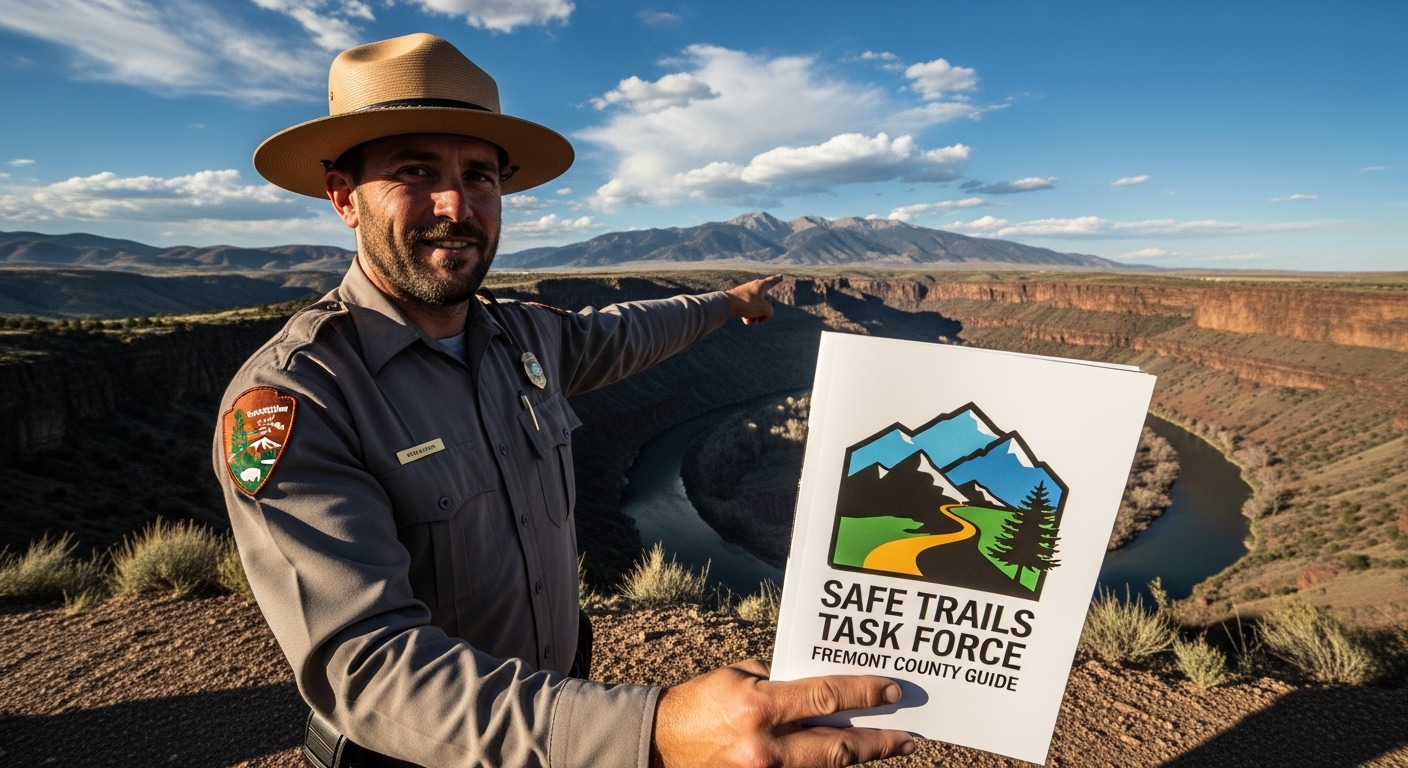
If you’re searching for the Safe Trails Task Force Fremont County Guide: Rules, Resources, and Key Contacts, you probably want clear answers without confusion. This topic gets misunderstood a lot, especially because the name sounds like outdoor trail safety, but it is actually tied to public safety enforcement and coordinated law enforcement work.
The Safe Trails Task Force Fremont County Guide: Rules, Resources, and Key Contacts explains how multiple agencies work together to handle serious threats like drug trafficking networks, violent crime, and cross-jurisdiction criminal activity. In simple words, it’s about keeping communities safer through coordination, not recreation trails or park rules.
Understanding the Safe Trails Task Force Fremont County System
The Safe Trails Task Force Fremont County is best understood as a multi-agency law enforcement coordination system. It is not a single police unit, but a collaboration between different authorities working together.
In practical terms, the structure works like this:
Safe Trails Task Force → operates as → a multi-agency law enforcement coordination system
Criminal networks → cross → city, county, state, and tribal boundaries
Task force structure → enables → shared intelligence and faster response
This system is commonly used in the United States when crimes become too complex for one agency to handle alone. It helps law enforcement track patterns, share intelligence, and respond more efficiently.
The main focus areas often include:
- Drug trafficking networks
- Weapons-related offenses
- Violent crime patterns
- Organized criminal activity
So basically, it’s not about small local issues, but bigger coordinated threats that move across regions.
Why the Safe Trails Task Force Exists in Fremont County
The purpose of this task force is pretty straightforward, even if the structure sounds complicated.
Law enforcement agencies → create → task forces to handle cross-border crime
In places like Fremont County, Wyoming, law enforcement faces challenges where criminals don’t stay inside one city or county. So, coordination becomes essential.
Key reasons for existence:
- Crimes often cross jurisdiction boundaries
- One agency may lack resources for large investigations
- Faster information sharing improves outcomes
- Complex cases need specialized support
This is why you see collaboration between:
- County Sheriff’s Office
- City Police Departments
- Federal law enforcement agencies
- Sometimes tribal law enforcement authorities
Each one brings something different to the table, like local knowledge, investigative tools, or federal-level intelligence support.
Clearing Confusion: Why “Safe Trails” Is Misleading
A lot of people think this task force is related to hiking or outdoor safety. That’s a common misunderstanding.
In reality:
- “Safe Trails” is not about hiking paths
- It is not about park maintenance
- It is not a recreation safety program
Instead, the name is linked to public safety enforcement efforts.
This confusion happens because:
- The word “trails” sounds outdoor-related
- People associate Fremont County with nature and parks
- Online searches mix recreation and law enforcement topics
So just remember:
Safe Trails Task Force → refers to law enforcement, not outdoor recreation
Jurisdiction in Fremont County: Why It Matters
Jurisdiction is one of the most important concepts in understanding this guide.
Fremont County → contains → multiple overlapping law enforcement jurisdictions
Depending on location, responsibility may shift between:
- City police (inside city limits)
- County sheriff (rural and county-wide areas)
- State agencies (state-level crimes)
- Federal agencies (large-scale criminal networks)
A simple breakdown:
Jurisdiction Roles
| Agency Type | Responsibility |
|---|---|
| City Police Department | Local crimes, city incidents |
| County Sheriff’s Office | County-wide law enforcement |
| Federal Agencies | Large-scale trafficking, interstate crime |
| Tribal Law Enforcement | Tribal land jurisdiction cases |
This structure ensures no area is left without coverage, even if crimes move across boundaries.
Rules for Safe Interaction with Law Enforcement
In the context of the Safe Trails Task Force Fremont County Guide, “rules” are not legal restrictions for civilians in daily life. Instead, they are practical safety behaviors that help protect you and ongoing investigations.
Here are key rules:
Do:
- Call emergency services (911) if there is immediate danger
- Report accurate details like time, place, and descriptions
- Use official tip lines when available
- Stay calm and factual when reporting
Don’t:
- Don’t confront suspects directly
- Don’t share unverified accusations online
- Don’t spread sensitive details publicly
- Don’t assume small information is useless
These rules help prevent:
- Interference with investigations
- Risk to personal safety
- Spread of misinformation
Key Contacts: Who to Call and When
Knowing the right contact is one of the most important parts of this guide.
Here’s a simple breakdown:
Contact System Overview
| Situation | Who to Contact | Purpose |
|---|---|---|
| Immediate danger | Emergency Services (911) | Life-threatening situations |
| Local incidents | City Police Department | City-based issues |
| Rural/county issues | County Sheriff’s Office | Wider county coverage |
| Large criminal networks | Federal Tip Lines | Organized or interstate crime |
Emergency Services → respond → immediate threats to life and safety
Local Police → handle → city-level incidents
Federal Agencies → investigate → large-scale criminal networks
If you’re unsure, start local first. They can guide you further.
What to Report: Useful Information That Actually Helps
One major misconception is that only “big evidence” matters. That’s not true at all.
Even small details can build a larger investigative picture.
Useful information includes:
- Exact time and location
- Vehicle descriptions and license plates
- Repeated suspicious activity
- Direction of movement
- Observed exchanges or behavior patterns
- Digital evidence (messages, screenshots, usernames)
Reporting Value Table
| Information Type | Why It Matters |
|---|---|
| Time & location | Builds timeline patterns |
| Vehicle details | Helps track movement |
| Repeated activity | Shows behavior patterns |
| Digital evidence | Provides direct communication proof |
| Witness observations | Supports investigation context |
Small details → contribute to → larger investigative patterns
So even if something feels minor, it can still be important.
Community Safety Resources and Prevention
Public safety is not just enforcement—it’s also prevention and awareness.
One major concern in many U.S. communities is fentanyl and counterfeit pills. These substances often appear similar to legitimate medication but can be extremely dangerous.
Basic safety guidance:
- Only use prescribed medication
- Never trust unknown pills from online sources
- Treat unidentified pills as unsafe
- Talk openly with teens about drug risks
Community support resources may include:
- Counseling centers
- Health clinics
- Addiction recovery programs
- School awareness programs
These systems help reduce harm before it escalates.
Partner Agencies and How They Work Together
The Safe Trails Task Force Fremont County system includes multiple layers of agencies working together.
Instead of thinking of them as separate entities, it’s easier to group them:
- Local level: City Police Departments
- County level: Sheriff’s Office
- State level: Investigative support units
- Federal level: Advanced crime investigation agencies
- Tribal level: Jurisdiction-specific enforcement bodies
Interagency collaboration → improves → investigation speed and accuracy
They don’t all do the same job. Instead, they share:
- Intelligence
- Resources
- Case information
- Operational planning
This coordination helps close gaps in enforcement.
Topical Gaps: What Competitors Don’t Explain Well
Most content about the Safe Trails Task Force Fremont County Guide misses important details.
1. Lack of Real Operational Examples
There is little explanation of real case scenarios showing how investigations actually move from tip → coordination → arrest. Readers are left guessing how the system works in real life.
2. Weak Breakdown of Agency Roles
Many guides mention “multiple agencies” but don’t clearly explain:
- Who leads investigations
- Who responds first
- How information is shared internally
This makes the structure feel abstract instead of practical.
Filling these gaps improves understanding and trust.
Community Prevention: Small Actions That Matter
Safety improves most when communities participate actively.
Helpful habits include:
- Checking on neighbors during emergencies
- Reporting repeated suspicious activity
- Supporting youth awareness programs
- Staying informed through official updates
Community awareness → reduces → long-term criminal opportunities
Even simple communication between neighbors can prevent escalation of issues.
Avoiding Rumors and Law Enforcement Scams
One major issue in public safety topics is misinformation.
To stay safe:
- Trust official announcements only
- Avoid sharing viral unverified posts
- Verify information before reacting
Also be aware of impersonation scams:
- Real agencies never ask for gift cards or crypto
- Always verify phone numbers independently
- Do not share personal information with unknown callers
Staying cautious helps protect both individuals and investigations.
Conclusion
The Safe Trails Task Force Fremont County Guide: Rules, Resources, and Key Contacts is ultimately about clarity, coordination, and community safety. It is not about outdoor trails, but about multi-agency law enforcement cooperation handling serious threats across jurisdictions.
When residents understand how to report properly, who to contact, and what information matters, they become active contributors to public safety. The system works best when communities and agencies work together through accurate reporting, calm communication, and responsible awareness.
FAQs
1. What is the Safe Trails Task Force Fremont County?
It is a coordinated multi-agency law enforcement effort focused on serious crimes like drug trafficking, violence, and organized criminal activity. It works across city, county, and sometimes federal or tribal jurisdictions to improve investigation efficiency and public safety outcomes.
2. Is the Safe Trails Task Force related to hiking trails?
No, despite the name, it is not related to outdoor recreation or hiking safety. The term “trails” is misleading. It refers to law enforcement operations focused on public safety, not parks, trail maintenance, or outdoor activities.
3. When should I contact emergency services?
You should contact emergency services immediately if there is a threat to life, an active crime, or urgent danger. This ensures fast response from law enforcement, fire, or medical teams depending on the situation.
4. What kind of information helps investigators most?
Accurate details like time, location, vehicle descriptions, and repeated suspicious patterns are most helpful. Even small observations can contribute to larger investigations when combined with other reports.
