
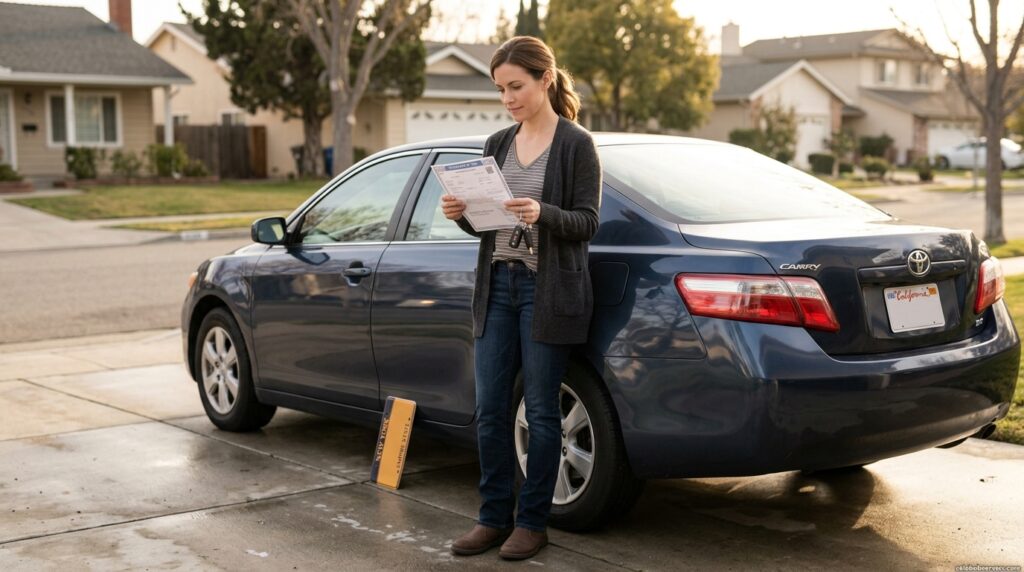
So you found a better deal three states away, or you’re moving and towing your car behind the truck, or maybe you bought a car from a private seller who lives across the border. Now you’ve got a vehicle with plates and paperwork from somewhere else, and no idea how to make it legal in your home state. The good news: this is a routine process DMVs handle constantly. The bad news: almost nothing about it is standardized, so what your cousin did in Ohio won’t necessarily match what you need to do in Texas.
I’ve registered vehicles bought out of state more times than I’d like to admit — once from a dealer three hours away, once from a private seller who mailed me a title, and once after driving a car home from an auction two states over. Each time, the paperwork trail looked a little different. Let me walk you through what actually matters, what trips people up, and how to figure out your state’s specific requirements without guessing.
The Short Version (Then We’ll Go Deep)
At a high level, registering an out-of-state purchase means: get the title transferred or in your name, pass any required inspections, prove you’ve got insurance, pay sales tax (usually to your home state, not the seller’s state), and hand it all to your local DMV or county tag office along with a registration application and fee. The order and specifics vary, but that’s the skeleton.
Where people get tripped up isn’t the concept — it’s the details. Which state collects the sales tax? Does the car need an inspection before you can even register it? What if the title is still with a lender? Let’s get into it.
Step 1: Figure Out Your Home State’s Deadline
Every state gives you a window after purchase (or after you establish residency, if you moved) to register the vehicle before penalties kick in. This window is commonly somewhere in the 10-to-30-day range, but it genuinely varies by state and sometimes by circumstance (bought vs. moved-in-with). Don’t assume — search “[your state] register vehicle purchased out of state deadline” or call your local DMV/tag office directly. Missing this window can mean late fees stacked onto your registration cost, so it’s worth locking this date down on day one.
Step 2: Get the Title Situation Sorted
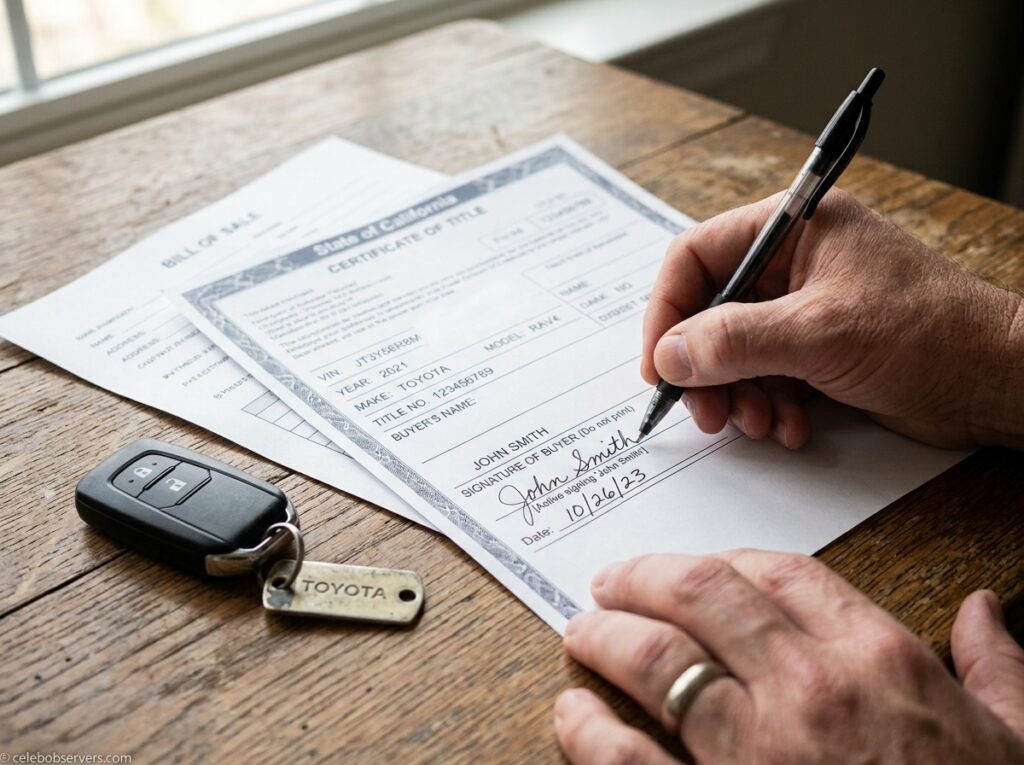
This is the single biggest point of failure in out-of-state purchases, so pay attention here.
Buying from a dealer: Most dealers, even out-of-state ones, are set up to handle title and registration paperwork, especially if they regularly sell to out-of-state buyers. Ask directly: “Will you handle the title work for my state, or do I need to do it myself?” Some dealers will mail the title application to your state DMV on your behalf. Others will simply hand you the paperwork and let you handle it. Don’t assume — confirm this before you drive off the lot.
Buying from a private seller: You need the physical title, signed over to you, in hand. If the seller still owes money on the car, there’s a lien holder involved, and the process gets more complicated — the lien has to be satisfied and released before a clean title can transfer, or you’re buying subject to that lien (rare, and risky, don’t do this without professional guidance). If the seller has lost the title, they’ll need to apply for a duplicate in their state before selling to you — that’s their problem to solve, not yours, and you shouldn’t hand over money until it’s resolved.
One thing people miss: some states require the odometer disclosure and the bill of sale to be notarized, and some don’t. If your seller’s state doesn’t require notarization but your home state does, you may need to track them down again after the fact to get it done properly. Ask about this before the deal closes, not after you’re home.
Electronic titles: A growing number of states have moved to electronic title systems, meaning there’s no physical paper document — the title exists as a record in the state’s system. If you’re buying from a state with e-titles, ask the seller (or dealer) how the transfer actually happens, because it may involve the seller’s state DMV releasing the record electronically to your state, which can take time you need to plan around.
Step 3: Sort Out Sales Tax — This Trips Up More People Than Anything Else

Here’s the part that confuses almost everyone: which state gets the sales tax, the one you bought the car in, or the one you’re registering it in?
In the overwhelming majority of cases, you pay sales tax to your home state — the state where you register and title the vehicle — not the state where you bought it. Dealers in states with no sales tax, or lower sales tax, sometimes get shopped specifically because buyers assume they’re dodging tax. They’re usually not. Your home state will assess tax (often based on purchase price or sometimes a state-determined value) when you register.
Some states have reciprocity agreements that credit you for sales tax already paid in the seller’s state, so you’re not double-taxed. Others don’t, or apply it differently depending on whether you’re an individual or dealer purchase. This is 100% something you need to verify directly with your state’s DMV or Department of Revenue — search “[your state] sales tax vehicle purchased out of state” and you’ll typically land on an official page explaining exactly how it’s calculated and whether any credit applies.
Also: don’t pay sales tax to the out-of-state dealer just because they ask for it, unless you’ve confirmed that’s how your home state’s process works. Some dealers near state lines are familiar with buyer states and will collect tax correctly on your behalf and forward it. Others will just collect their own state’s tax by default, which may leave you either overpaying or needing to fight for a refund. Ask directly: “Are you collecting tax for my home state, or is that something I handle myself at registration?”
Step 4: Inspections — Emissions, Safety, and VIN Verification
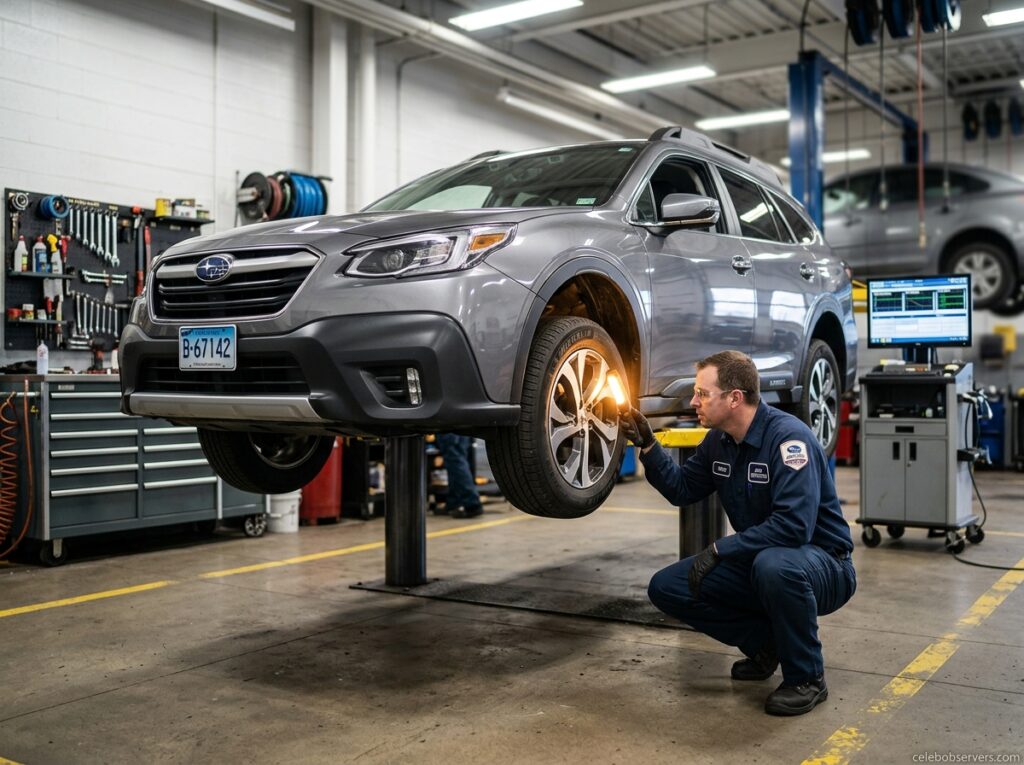
Depending on your state, you might need one, two, or none of the following before you can register:
- Safety inspection — checks brakes, lights, tires, etc. Some states require this annually regardless of where the car came from; others only require it at point of registration for out-of-state vehicles.
- Emissions/smog inspection — often tied to the county you live in, not just the state. Some states exempt newer vehicles, some exempt certain vehicle types, some don’t require it at all. Check current rules for your specific county.
- VIN verification — a physical check confirming the vehicle’s identification number matches the paperwork. This is extremely common for out-of-state vehicles specifically, even in states that don’t require it for in-state transfers, because the DMV wants an independent confirmation the car is what the title says it is. This can often be done by a licensed dealer, a police officer, a DMV inspection station, or sometimes a notary, depending on your state — check which of these your state accepts.
Because these requirements vary so much by state (and sometimes county), search “[your state] VIN verification out of state vehicle” and “[your county] emissions inspection requirements” separately. Don’t assume the state-level rule and county-level rule are the same thing.
Step 5: Insurance — Get It Before You Drive Home
You’ll need an active insurance policy meeting your home state’s minimum coverage requirements before you can legally drive the car, and you’ll need proof of insurance to register it. If you’re driving the car home across state lines, call your insurer before you leave the seller’s driveway — most insurers can bind coverage same-day over the phone or through their app, but you want that confirmation in hand, not a vague assumption that you’re “probably covered” under some existing policy. If you’re financing through a lender, they’ll also require proof of comprehensive/collision coverage meeting their minimums, which is often stricter than your state’s legal minimum.
Step 6: Gather Your Documents
While the exact list varies by state, you’ll typically need most of these:
- The signed title (or, for e-title states, whatever documentation your state issues in place of it)
- A bill of sale (sometimes required even if the title has the sale info on it)
- Proof of insurance
- Proof of identity and residency (driver’s license, sometimes a second proof like a utility bill)
- Odometer disclosure statement (often built into the title itself, sometimes a separate form)
- Any lien release documentation, if applicable
- Passed inspection paperwork (safety, emissions, VIN, whichever apply)
- Your state’s vehicle registration/title application form
Every state’s DMV website lists their exact required documents for “out of state title transfer” or “out of state vehicle registration” — this is worth printing out or screenshotting before you go, because showing up missing one document means a second trip.
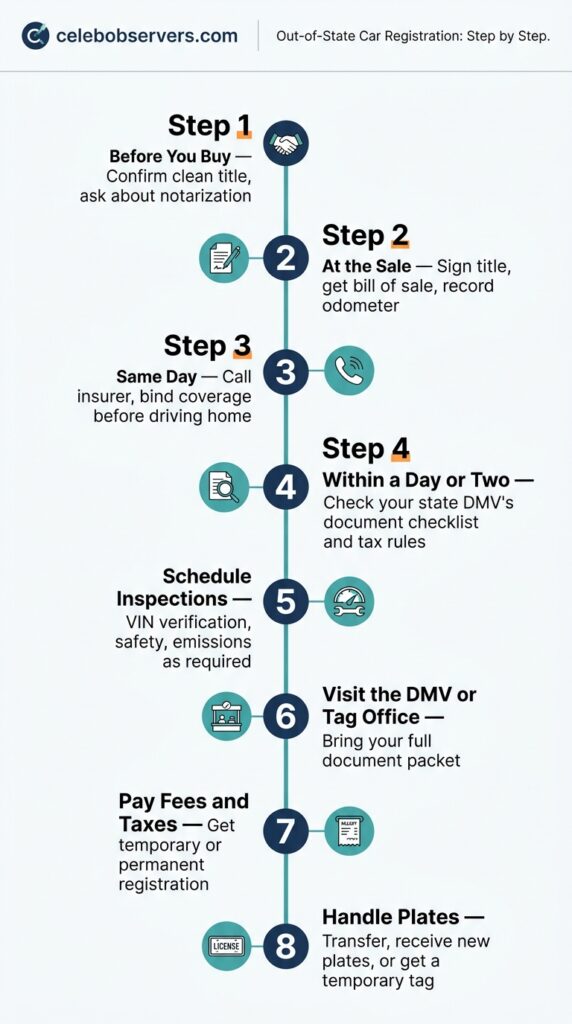
Step-by-Step: A Realistic Walkthrough
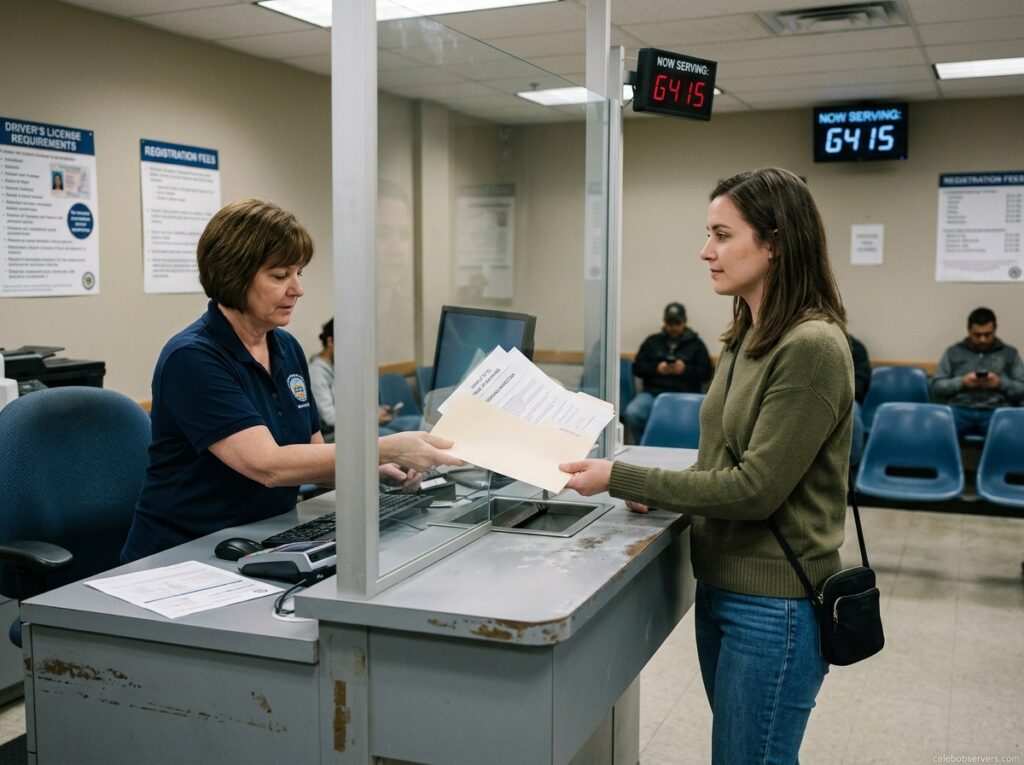
Here’s how this tends to play out in practice, using a private-party purchase as the example since it’s the most hands-on version:
- Before you buy: Confirm the seller has a clean title in hand (no lien, or lien payoff already handled). Ask whether their state requires notarized signatures on the title transfer.
- At the sale: Get the title signed over to you, get a bill of sale with VIN, purchase price, date, and both parties’ info, and get the odometer reading documented.
- Same day, before driving home: Call your insurer and bind coverage. Don’t drive uninsured, even for a short trip.
- Within a day or two of getting home: Check your state DMV’s website for the specific document checklist and current sales tax rules for out-of-state purchases.
- Schedule your inspections: VIN verification, safety inspection, emissions — whichever your state and county require. Some of these need to happen at a state-approved location, not just any mechanic, so confirm before you go.
- Visit your DMV or county tag office (many states require this in person, at least for the first out-of-state registration) with your full document packet.
- Pay your fees and taxes. You’ll typically walk out with a temporary registration/plate or a permanent one on the spot, depending on your state’s process and whether they need to mail the actual title.
- Handle plates. Some states let you transfer plates from a previous vehicle you owned; others issue new plates on the spot; others mail plates within a couple weeks and give you a temporary paper tag in the meantime.
Common Mistakes People Make
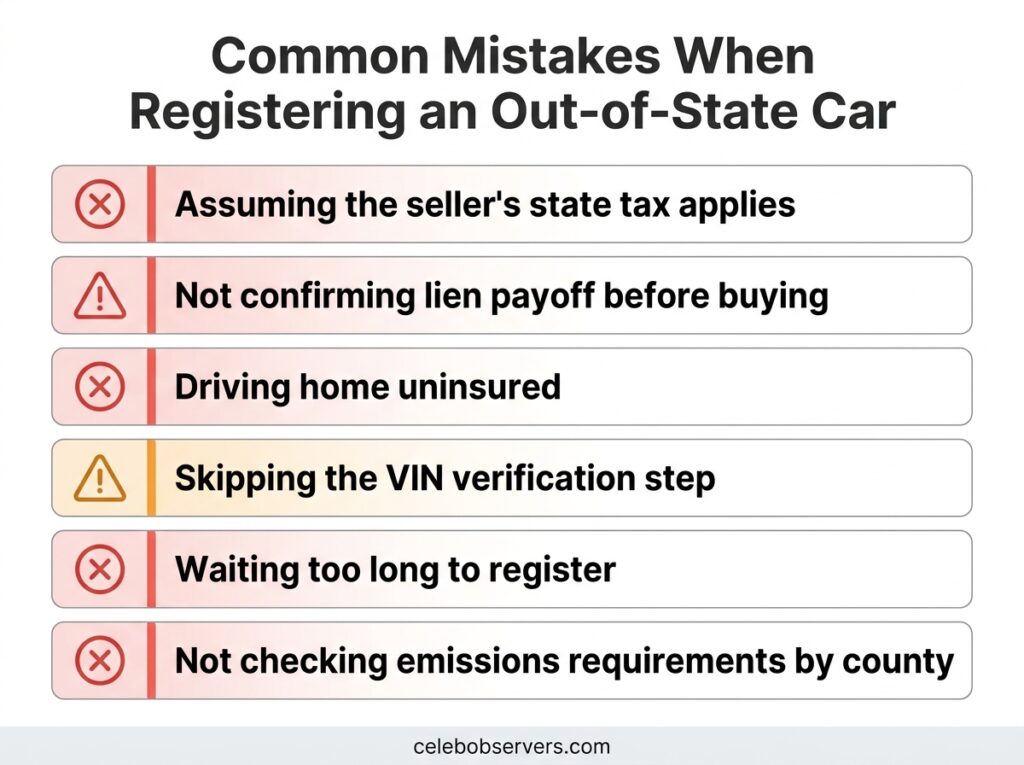
Assuming the seller’s state tax applies. Covered above, but worth repeating because it’s the most common misunderstanding. Verify with your own state.
Not confirming lien payoff before buying. If a private seller still owes money on the car, don’t hand over full payment until you’ve confirmed the lien holder has released the title or you’ve got an ironclad, verifiable plan for how that release happens simultaneously with your payment. Buying a car with an unresolved lien can leave you with a title you can’t actually transfer.
Driving home uninsured. People assume their current policy automatically covers a “new” vehicle for a grace period. That’s sometimes true for a vehicle you already own that gets totaled and replaced, but it’s not a safe assumption for a brand-new purchase, especially across state lines. Call first.
Skipping the VIN verification step. This one catches people off guard because it’s specific to out-of-state vehicles in a lot of states, and if you don’t know to expect it, you show up to the DMV without it and get sent away.
Waiting too long. Late fees for missing your state’s registration deadline are avoidable — the deadline exists, find it, and work backward from it.
Not checking emissions requirements by county. People check the state rule, see their vehicle is exempt, and don’t realize their specific county has an additional requirement layered on top.
Assuming the out-of-state dealer’s paperwork is complete. Even reputable dealers sometimes miss a state-specific form your DMV requires. Double-check the full document list yourself rather than trusting that “the dealer handles everything.”
What It Costs and How Long It Takes
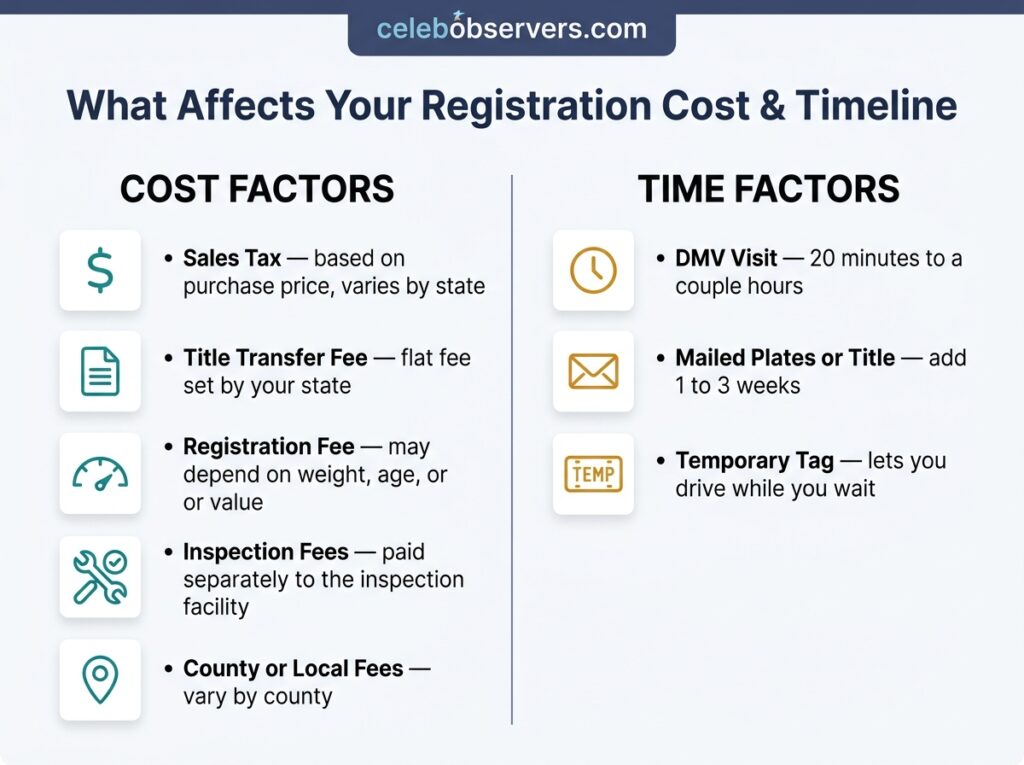
This is genuinely one of the most variable parts of the whole process, and anyone who gives you a flat number without knowing your state is guessing. Here’s what actually determines your cost and timeline, and how to find your real numbers:
Sales tax — usually the largest cost, calculated as a percentage of purchase price (or sometimes a state-assessed value), varies significantly by state, and some states have no sales tax at all. Search your state Department of Revenue’s vehicle tax page for the exact rate and how it’s calculated.
Title transfer fee — a flat fee set by your state, typically a modest fixed amount, listed on your DMV’s fee schedule.
Registration fee — sometimes flat, sometimes based on vehicle weight, age, or value, and can include separate plate fees. Your state DMV’s registration fee schedule will have this broken out.
Inspection fees — safety and emissions inspections usually have their own separate cost, paid to whatever facility performs them, not the DMV.
County or local fees — some states allow counties to tack on additional registration fees, so your neighbor in the next county over might pay a different amount than you.
Timeline — the in-person DMV visit itself might take anywhere from twenty minutes to a couple hours depending on how busy your local office is (many states let you book an appointment online, which is worth doing). If your state has to physically mail your plates or title, add another one to three weeks on top of that, though you’ll typically get a temporary tag to drive on in the meantime.
The honest answer is: pull up your state DMV’s fee calculator if they have one (many do), plug in your specific vehicle and situation, and you’ll get real numbers instead of a guess.
Summary: The Actual Order of Operations
If you take nothing else from this, remember the sequence: confirm the title is clean and transferable, get insurance bound before you drive, figure out your home state’s tax and document requirements early, knock out whatever inspections your state and county require, then bring the full packet to your DMV or tag office before your deadline. The paperwork isn’t complicated in isolation — it’s the number of moving pieces, and the fact that each state arranges them differently, that makes this feel harder than it is. Do the verification steps early, and the actual DMV visit becomes a formality instead of a scramble.
FAQ
Do I have to register the car in the state where I bought it first? No. In almost all cases, you register and title the vehicle in your home state — the state where you actually live and where the car will primarily be driven. The purchase location generally doesn’t require its own separate registration step, though you may need certain documents notarized or verified there before you leave.
Can I drive the car home before it’s registered in my state? Generally yes, as long as it’s currently insured and has valid, unexpired plates or a temporary transit permit — either the seller’s existing plates (in some states, temporarily) or a temporary tag issued by the dealer or seller’s state. Check your home state’s rules on how many days you’re allowed to drive on out-of-state plates before you must register, since this varies.
What happens if I miss my state’s registration deadline? You’ll typically owe a late fee on top of your normal registration costs, and the exact penalty amount and structure depends on your state. Some states also charge back taxes or interest if the delay is long enough. It’s worth confirming your exact deadline the same week you buy the car, so you’re not caught off guard.
Do I need a new inspection if the car already passed one in the seller’s state? Almost always yes. Inspections are generally tied to the state (and sometimes county) where the vehicle is registered, not portable across state lines, so an inspection passed elsewhere typically doesn’t count toward your home state’s requirement. Budget time for a fresh inspection after you get home.