

You just sold your car, cash or check is in hand, and now you’re standing in the driveway holding a license plate like it’s a hot potato. Does it go with the car? Do you take it off? Can you get in trouble if you hand it over by mistake? These are the questions people scramble to answer after the sale, when it’s a little too late to plan ahead.
Here’s the short version: in most US states, the license plate stays with you, not the car. You’re supposed to remove it before the buyer drives away. But “most states” isn’t “all states,” and the exceptions trip people up constantly. Let’s get into exactly what to do, state by state logic, and how to avoid the mistakes that turn a simple sale into a paperwork headache.
Does the License Plate Stay With the Car or With You?
This is the single most common point of confusion in a private car sale, and the answer depends entirely on your state.
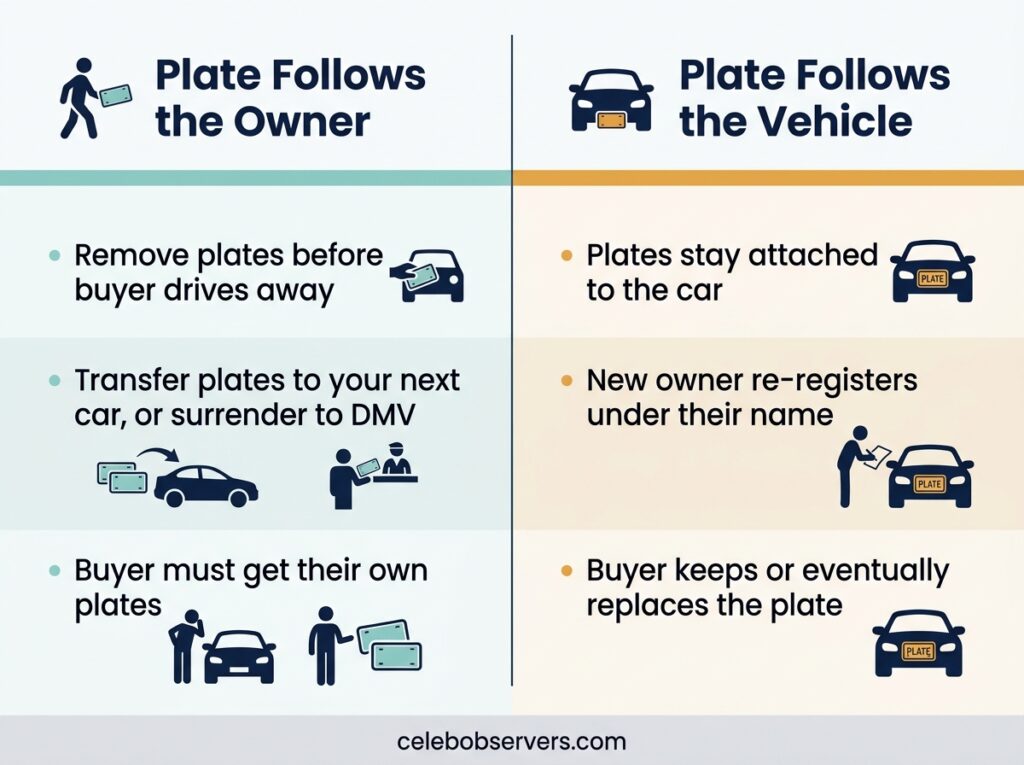
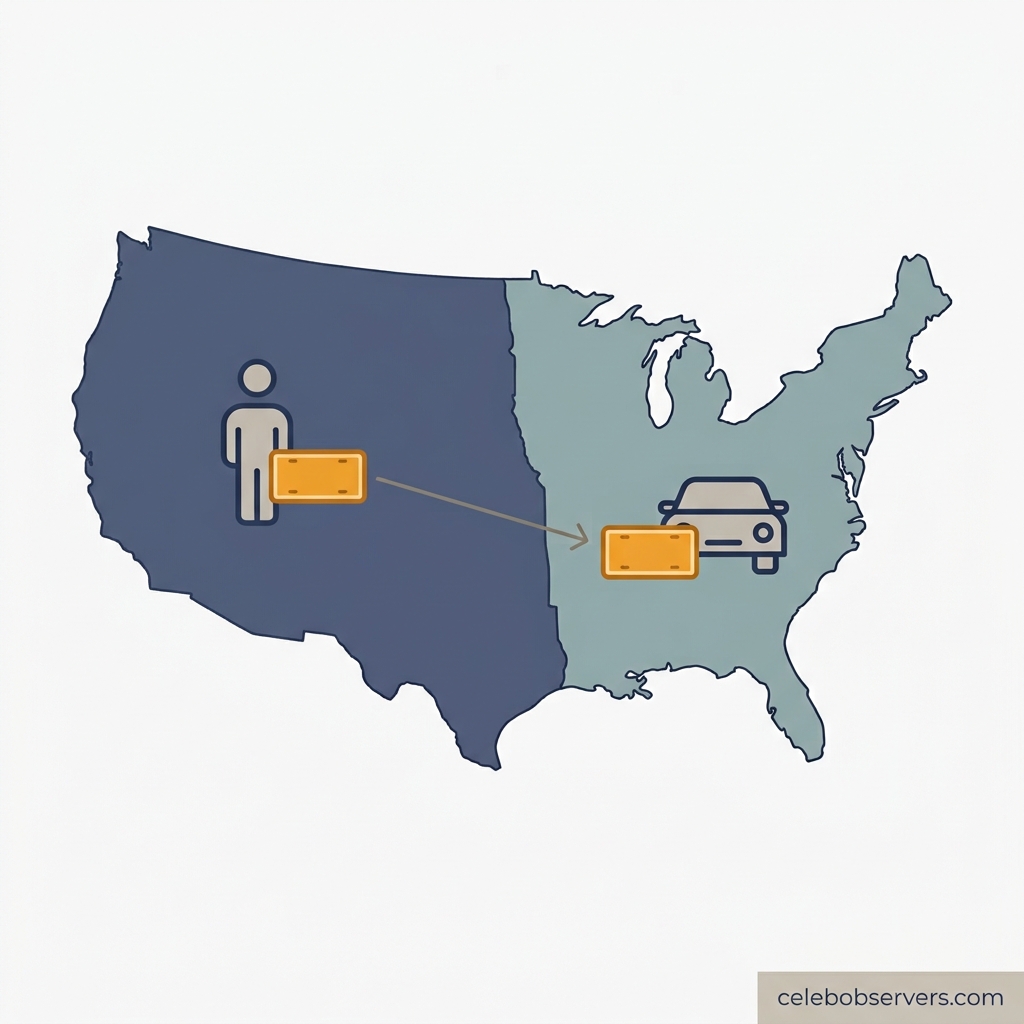
In the majority of states, plates are tied to the owner, not the vehicle. That means when you sell the car, you take the plates off and either transfer them to your next vehicle, or turn them in to the DMV. The buyer needs to get their own plates before they can legally drive the car.
In a smaller group of states, plates are tied to the vehicle. In those states, the plate stays on the car when it changes hands, and the new owner registers the vehicle under their name while keeping (or eventually replacing) the existing plate.
I’ve sold cars in states from both camps, and I can tell you the “plate follows the vehicle” states genuinely surprise people who moved from a “plate follows the owner” state. They assume the rule is universal. It isn’t.
Why this matters practically: if you hand over plates you were supposed to keep, you could end up on the hook for tickets, tolls, or worse if the buyer does something illegal in a vehicle registered in your name with your old plates still attached. If you strip plates the buyer was legally entitled to keep, you’ve created an unnecessary headache for both of you at the DMV.
Because this rule varies and can be updated by your state legislature, don’t rely on general internet advice (including this article) for the final word. Search “[your state] DMV license plate transfer rules” or call your local DMV/BMV office directly before the sale. It takes five minutes and prevents a real mess.
Why the Rule Exists (and Why It’s Different by State)
Plates aren’t just a piece of stamped metal. They’re a registration credential tied to insurance verification, toll systems, emissions tracking, and law enforcement databases. States that tie plates to owners do it because they want continuous accountability — the state knows who is driving under that plate number at all times, independent of which car they own.
States that tie plates to vehicles treat the plate more like a permanent ID card for that specific car, similar to how a VIN works. The logic there is administrative simplicity: less plate-swapping paperwork, fewer new plates manufactured, lower cost to the state.
Neither system is “better” — they’re just different philosophies, and you have to know which one your state uses before you sell.
How to Find Out Your State’s Exact Rule
Don’t guess. Here’s how to get a reliable answer in a few minutes:
- Search directly: Type “[your state name] DMV” or “[your state name] BMV/MVD” into a search engine and go to the official .gov site. Avoid third-party sites that aggregate DMV info — they’re often outdated.
- Look for a page called “Selling a Vehicle,” “Transfer of Ownership,” or “License Plates.” Most state DMV sites have a dedicated page for exactly this scenario.
- Call the DMV directly if the website is vague. Ask specifically: “When I sell my car privately, do I remove the plates, or do they stay with the vehicle?”
- Ask about your specific plate type. Some states have different rules for standard plates versus specialty, vanity, or dealer plates, so make sure you’re asking about the plate you actually have.
Save yourself the guesswork — this single phone call or search resolves 90% of the confusion in this entire topic.
Step-by-Step: What To Actually Do When You Sell Your Car
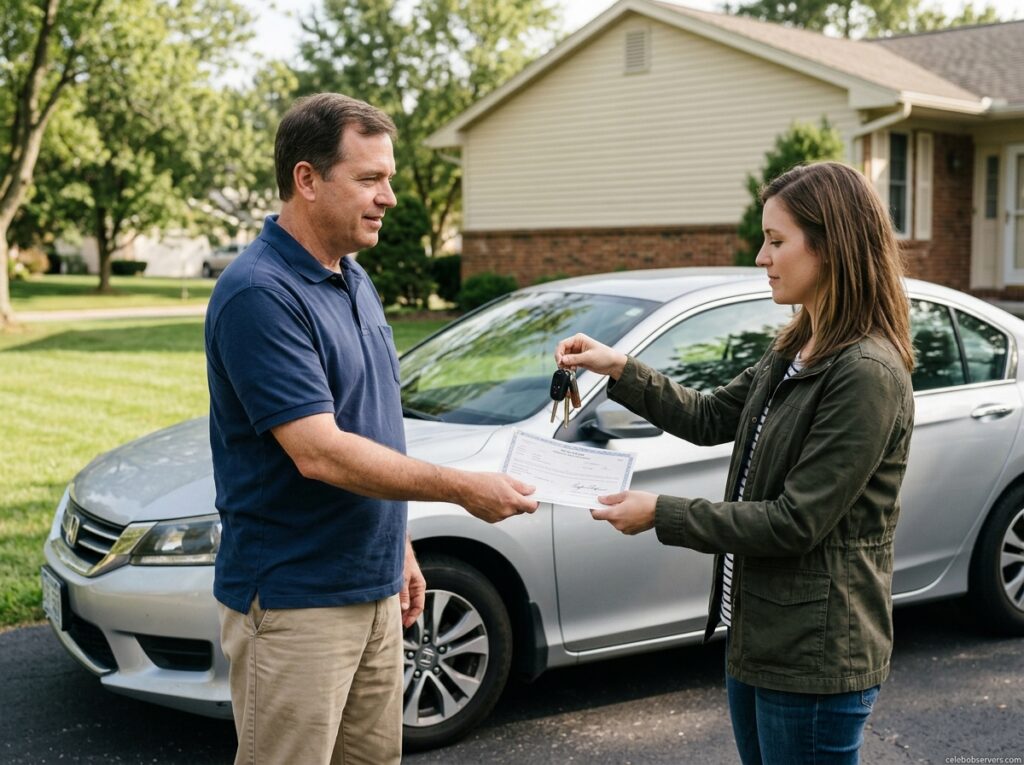
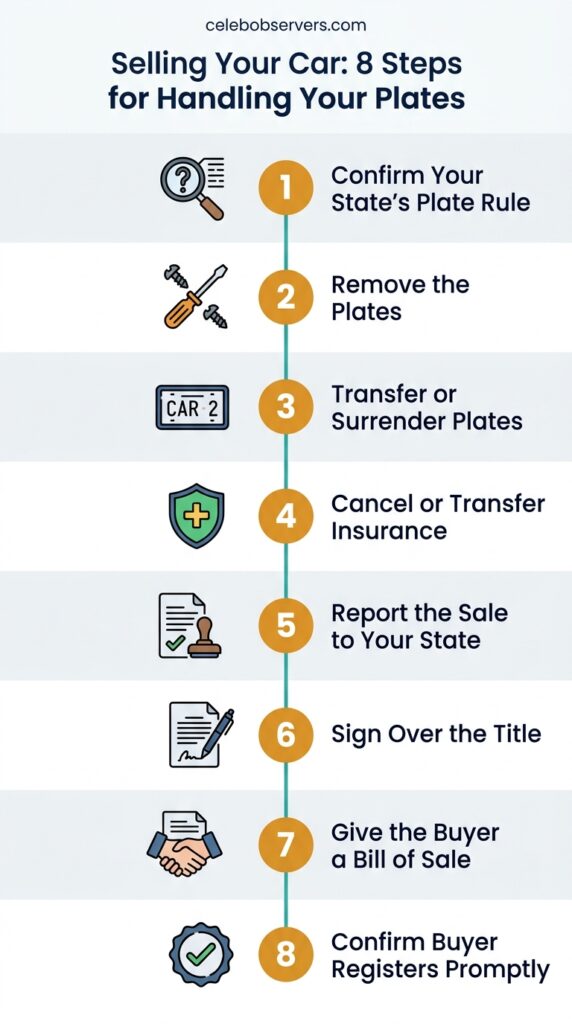
Here’s a realistic walkthrough assuming you’re in a “plates stay with the owner” state, since that covers most readers. I’ll flag where a “plates stay with the vehicle” state would differ.
Step 1: Confirm your state’s plate rule before the buyer shows up
Do this days ahead, not in the driveway during the handoff. You don’t want to be fumbling through a DMV website while an impatient buyer waits with cash in hand.
Step 2: Remove the plates before the car leaves your possession
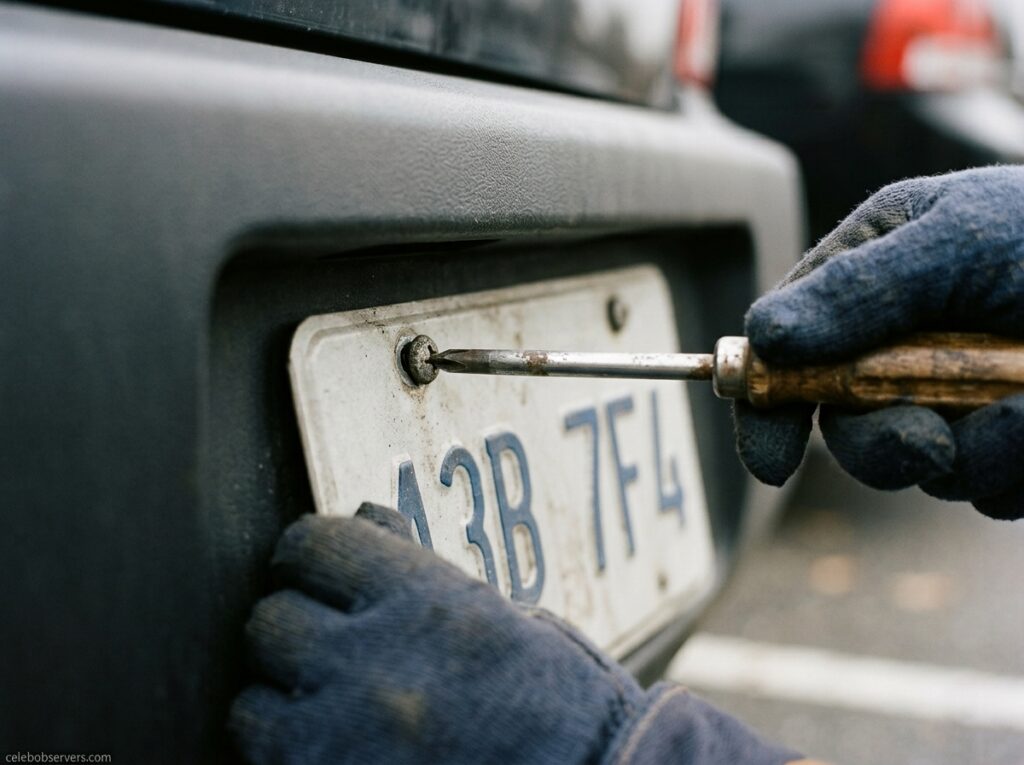
If your state ties plates to the owner, take them off. Bring a screwdriver — plates are usually held on with two small screws, sometimes rusted stuck if you live somewhere with harsh winters or coastal salt air. Do this before the buyer drives off, not after. Once that car leaves your driveway with your plates still bolted on, you’ve lost control of the situation.
(If your state ties plates to the vehicle, skip this step — the plates transfer with the car, and you’ll hand over the title with plates attached.)
Step 3: Decide what to do with the removed plates
You generally have two options:
- Transfer them to your next vehicle. Many states let you move plates to a replacement car you’re registering, sometimes for no fee or a small transfer fee. This is common when people go straight from selling one car to registering another.
- Surrender them to the DMV. If you’re not buying another vehicle right away, you typically need to return the plates to a DMV office. Some states allow mailing them in; others require an in-person drop-off. A few states will also let you request cancellation of the registration and plate destruction if you’re simply done with the plate.
Don’t just toss old plates in a drawer indefinitely. In some states, an unreturned plate can keep showing an “active” registration under your name, which can complicate insurance cancellation or, in rare cases, create liability confusion if the plate number gets misused.
Step 4: Cancel or transfer your insurance
Call your insurance company the same day you sell the car. If you’re not immediately registering a replacement vehicle, ask about canceling coverage on that car specifically. If you’re buying another car, ask about transferring the policy. Don’t leave a policy active on a car you no longer own — you’re just paying for nothing.
Step 5: Report the sale to your state (if required)
Many states require sellers to file a notice of transfer or release of liability, separate from the buyer’s registration paperwork. This document is what protects you if the buyer doesn’t register the car promptly and it racks up tickets, tolls, or worse under your name. Search your state DMV site for terms like “Notice of Transfer,” “Release of Liability,” or “Bill of Sale requirements” to find the exact process and any time limit for filing it — these deadlines vary by state and can change, so check current rules.
Step 6: Hand over the title, properly signed
Sign the title over to the buyer following your state’s exact instructions — where to sign, whether you need to fill in the sale price and odometer reading, and whether notarization is required. Some states require the odometer disclosure on the title itself; others use a separate form. Photograph or photocopy the signed title and the bill of sale before you hand anything over, for your own records.
Step 7: Give the buyer a bill of sale
Even in private-party sales where it’s not strictly mandatory, a bill of sale protects both parties. Include the date, sale price, VIN, odometer reading, both parties’ names and signatures, and a simple statement that the vehicle is sold “as-is” if that’s the deal. Keep a copy for yourself.
Step 8: Confirm the buyer registers the car promptly
You can’t force this, but you can follow up. Most states give buyers a window (commonly somewhere between a couple weeks and a month, but this varies significantly and changes over time, so verify with your state) to register the vehicle in their name. Until they do, in a lot of states the vehicle is technically still linked to you in DMV records unless you’ve filed that release of liability from Step 5. This is exactly why that step matters so much.
Common Mistakes People Make
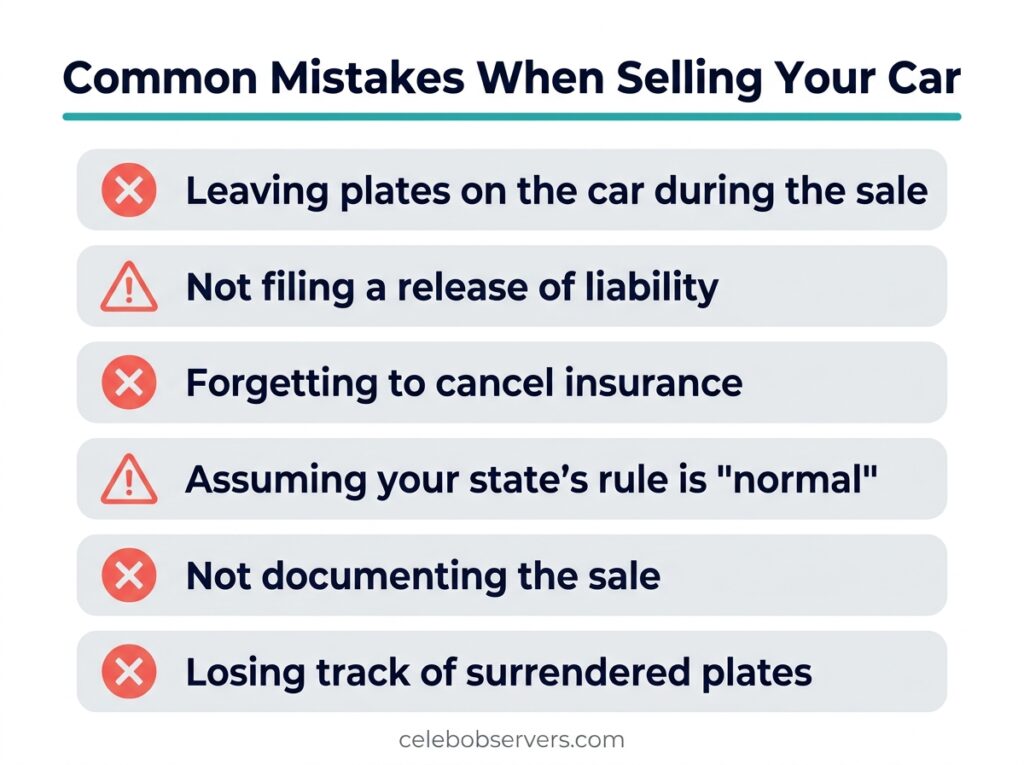
I’ve seen (and made) a few of these myself over the years:
- Leaving the plates on the car during the sale. This is the number one mistake in “plate follows the owner” states. People just aren’t thinking about it in the moment, especially if the sale happens fast.
- Not filing the release of liability or notice of transfer. People assume signing the title over is “enough.” In a lot of states, it isn’t — you need a separate filing to fully disconnect yourself from the vehicle in DMV records.
- Forgetting to cancel insurance, which either leaves you paying for a car you don’t own, or in rare edge cases causes a lapse-in-coverage issue when you don’t formally document the change.
- Assuming your state’s rule is the “normal” one. People who’ve moved states, or who are selling a car for the first time based on advice from a friend in another state, often apply the wrong rule entirely.
- Not documenting the sale. No bill of sale, no photos of the signed title, no record of the odometer reading. If a dispute comes up later — say, the buyer claims you misrepresented mileage — you have nothing to point to.
- Losing track of plates you removed. If you’re surrendering plates rather than transferring them, do it promptly. A plate sitting in your garage for six months is a plate that’s technically still “yours” in the system.
- Not checking whether a transfer fee applies. If you’re moving plates to a new vehicle, some states charge a small transfer fee, and skipping payment can delay your new registration. Check your state’s fee schedule rather than assuming it’s free.
What It Costs and How Long It Takes
This is genuinely one of those areas where I won’t give you a specific number, because the honest answer is “it depends,” and any dollar figure I gave you here could be wrong by the time you read this. Costs and processing times are set by individual states (and sometimes counties), and they change.
Here’s what actually affects the cost and timeline, and how to find your real numbers:
Factors that affect cost:
- Whether you’re transferring plates to a new vehicle (often a small fee) versus surrendering them (often free)
- Whether your state charges a title transfer fee to the buyer (this is usually the buyer’s cost, not yours, but worth knowing)
- Whether you owe any registration renewal fees up to the date of sale
- Whether you need a notarized signature, which may involve a small notary fee if you don’t have free access to one (some banks offer this free to customers)
Factors that affect time:
- Whether your DMV allows online filing of the release of liability, or requires an in-person visit or mail-in form
- How busy your local DMV office is (this varies wildly by location and time of year)
- Whether you’re transferring plates to a new vehicle in the same transaction, which can sometimes be done same-day, versus surrendering plates by mail, which can take longer to process
How to find your actual cost and timeline: go to your state DMV’s fee schedule page (usually searchable as “[state] DMV fee schedule”) or call your local office. Ask specifically: “What’s the fee for plate transfer versus plate surrender, and how long does processing typically take?” Front-desk staff deal with this exact question constantly and can usually give you a same-day answer.
What If You’re Buying a New Vehicle at the Same Time?
If you’re selling one car and buying another around the same time, ask your DMV whether you can transfer your existing plates directly to the new vehicle instead of surrendering them and getting new ones issued. In states where plates follow the owner, this is often allowed and can save you a step (and sometimes a fee), since you keep the same plate number across vehicles. You’ll typically need the new vehicle’s title or bill of sale and your current registration on hand when you do this in person.
What If You’re Selling to a Dealer Instead of a Private Buyer?
Trading in or selling to a dealership changes the process slightly. Dealers are set up to handle title transfers and often the plate question too, but the same core rule applies: if your state ties plates to the owner, take them off before you leave the lot unless the dealer specifically tells you otherwise and you’ve confirmed that’s correct for your state. Don’t just assume the dealer will “handle it” the same way a DMV would — ask them directly what their process is for plate handling, since practices can vary by dealership even within the same state.
FAQ
Do I need to remove my license plates before selling my car? In most states, yes — plates are tied to the owner, not the vehicle, so you take them with you when the car changes hands. Some states are the exception and keep plates attached to the vehicle. Confirm which rule applies to you before the sale by checking your state DMV site or calling directly.
Can I get in trouble if I leave my plates on a car I sold? Potentially, yes, especially in states where plates are owner-specific. If the buyer drives around with your plates still on the car, any tickets, tolls, or violations could initially trace back to you until the registration is updated. Filing a release of liability or notice of transfer as soon as you sell helps protect you even if the plate situation gets messy.
What do I do with my old license plates after I sell my car? Transfer them to your next vehicle if you’re buying one, or surrender them to your state DMV if you’re not. Some states allow mail-in surrender; others require an in-person visit. Don’t leave them sitting around unreturned — it can complicate your registration records.
Does the buyer need new plates right away? Usually yes, if your state ties plates to the owner — the buyer can’t legally drive on your old plates once ownership transfers, and needs to register the vehicle and get their own plates, often within a set window that varies by state. If your state ties plates to the vehicle, the existing plate may stay on the car and simply get re-registered under the new owner’s name.
The Bottom Line
The plate question feels small until you’re standing in your driveway holding one, unsure whether to hand it over. The fix is simple: figure out before the sale whether your state ties plates to you or to the vehicle, remove or leave them accordingly, and file whatever release-of-liability paperwork your state requires so you’re fully disconnected from that vehicle’s record. Do those three things and the rest of the sale — bill of sale, title transfer, insurance changes — falls into place without drama. The people who run into trouble aren’t the ones who did something reckless; they’re the ones who just didn’t check the rule ahead of time.