

You just bought a car, and you need to drive it home, but the permanent plates haven’t shown up yet. Or maybe you’re moving to a new state and your old plates are about to become illegal to use. Either way, you’ve got a legal gap between “I own this vehicle” and “this vehicle has plates,” and that gap is exactly what temporary plates exist to fill.
I’ve dealt with temporary tags for personal vehicles, for family members buying cars out of state, and for a used car I once bought from a private seller who had no idea what paperwork I’d need. The process is simpler than most people expect, but the details that trip people up are almost always the same handful of things. Let’s walk through all of it.
What a Temporary License Plate Actually Is
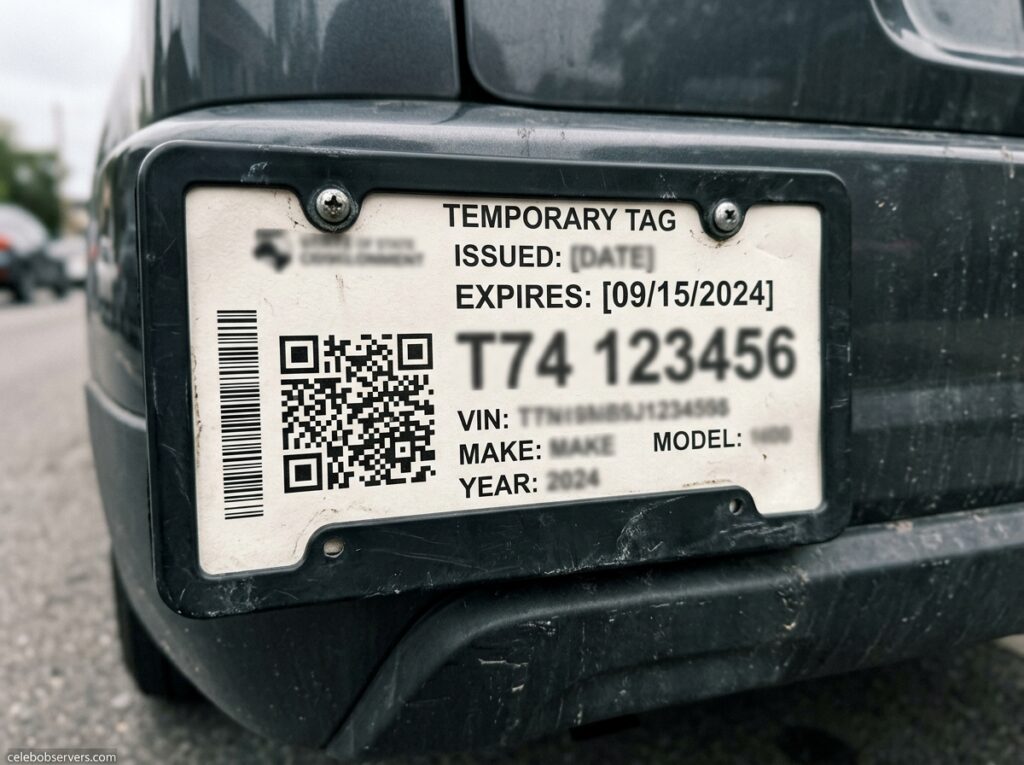
A temporary license plate (sometimes called a temp tag, drive-out tag, or temporary registration permit) is a short-term, legal placeholder that lets you operate a vehicle on public roads before it has permanent plates. It’s not a suggestion or a formality — it’s a real legal document tied to your vehicle identification number (VIN), and driving without one when you’re required to have it can get you pulled over, ticketed, or worse, have your car impounded in some states.
Temp tags typically come in one of two forms:
- A paper placard you tape or place in your rear window or windshield (common for dealer-issued temps).
- A paper plate that goes in the physical plate holder on the back of your car, sometimes on the front too depending on the state.
Some states are moving toward printed temporary tags with barcodes or QR codes that law enforcement can scan, largely as a response to counterfeit temp tag fraud, which has been a real problem in a few states over the past several years. If you’re getting a temp tag from a dealer, ask whether it’s a scannable version — some states now require it.
Why Temporary Plates Exist
There are really three common scenarios where you need one:
1. You just bought a vehicle. Whether from a dealership or a private party, the vehicle needs some kind of legal registration to be driven, and permanent plates take time to process — sometimes because of a backlog, sometimes because the DMV mails them, sometimes because your state requires an emissions test or inspection first.
2. You’re moving to a new state. Your home state’s plates are often only valid for a limited window after you establish residency elsewhere (this window varies by state — sometimes 30 days, sometimes 60, sometimes tied to when you get a driver’s license there). A temp tag from your new state bridges the registration process while you sort out title transfer, inspections, and taxes.
3. Your permanent plate or registration is delayed, lost, or stolen. If your registration renewal got stuck in the mail, or your plates were stolen off your car, many DMVs will issue a temporary tag while they sort out a replacement.
There’s a fourth, less common scenario: transporting an unregistered vehicle for a specific purpose, like driving it to a mechanic, a new home after a repossession, or across state lines for sale. Some states call this a “trip permit” or “transport permit,” and it’s usually valid for a very short window, sometimes just a few days.
Who Issues Temporary Plates

This is the part people get wrong most often. Depending on your state and situation, a temporary plate might come from:
- The car dealership — most states let licensed dealers issue temp tags directly at the point of sale, especially for new cars.
- Your state’s DMV (or equivalent agency) — for private-party sales, out-of-state moves, or replacement situations.
- A county tax office or clerk — in states where vehicle registration runs through county government rather than a centralized DMV (Texas is a good example of this).
- Online through your state’s DMV portal — an increasing number of states now let you generate and print a temp tag yourself after submitting proof of purchase and insurance.
If you bought from a dealer, ask them directly whether they’ll issue the temp tag or whether you need to get one yourself. Don’t assume. I’ve seen buyers drive off a lot assuming the dealer handled it, only to find out weeks later they were driving around unregistered because the dealer’s temp tag process failed or the paperwork never got filed.
What You Need to Get a Temporary Plate
Requirements vary meaningfully by state, but you’ll almost always need some combination of:
- Proof of ownership — a signed title, a bill of sale, or a dealer purchase agreement.
- Proof of identity — a driver’s license or state ID.
- Proof of insurance — most states require an active policy before they’ll issue any kind of tag, temporary or not.
- A completed application — this might be a specific state form, or in some states just a request made in person or online.
- Payment of a fee — temp tag fees are usually modest, but they do vary by state and sometimes by how long the tag is valid for. Check your state DMV’s fee schedule for the current number, since these do change.
Because form numbers, exact fee amounts, and required documents differ so much state to state — and because states update these things without much fanfare — the reliable way to know exactly what you need is to search “[your state] temporary license plate” or “[your state] temporary registration permit” on your state DMV’s official website. Almost every state DMV site has a dedicated page for this because it’s such a common question.
Step-by-Step: Getting a Temporary Plate After a Private-Party Purchase
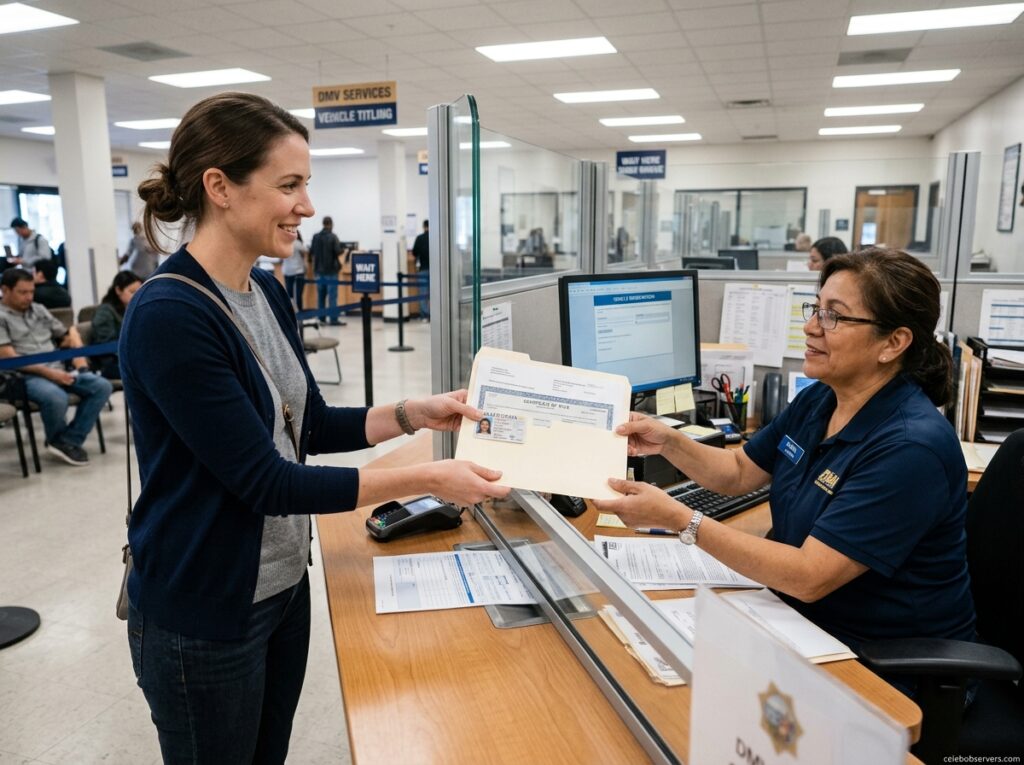
This is the scenario that trips up the most people, because there’s no dealer doing the paperwork for you. Here’s how it typically goes:
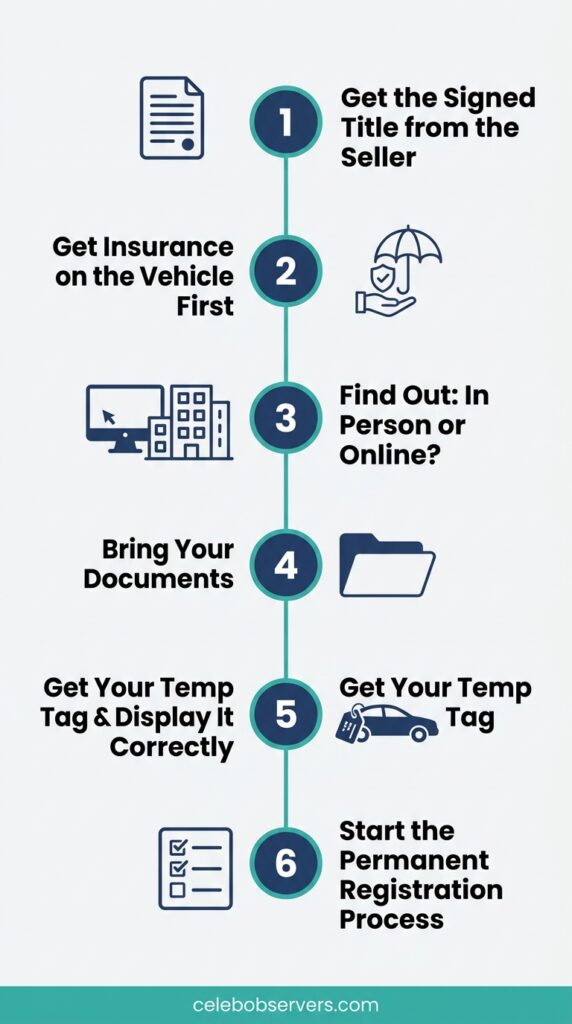
Step 1: Get the signed title from the seller. Before anything else, make sure the seller has signed the title over to you correctly. Some states require the odometer reading, sale date, and sale price on the title itself. If the seller messes this up (crosses something out, forgets to sign, etc.), it can delay everything downstream, including your ability to get a temp tag.
Step 2: Get insurance on the vehicle first. You typically cannot register a vehicle, temporarily or otherwise, without proof of insurance. Call your insurance provider (or use their app) and add the vehicle by VIN before you head to the DMV. Do this the same day you buy the car if possible — a lot of states require continuous coverage from the purchase date, not from whenever you got around to calling.
Step 3: Find out whether your state issues temp tags in person, online, or both. Some states let you handle this entirely online in under 15 minutes if you have the title and insurance info ready. Others require an in-person visit to the DMV or county tax office. A quick search of your state DMV’s website will tell you which applies.
Step 4: Bring your documents. Typically: signed title, proof of insurance, your ID, and payment for the fee. Some states also want a completed application form, which you can often download and fill out ahead of time to save yourself standing in line filling it out on a clipboard.
Step 5: Get your temp tag and display it correctly. Follow your state’s rules on placement — windshield versus rear window versus plate holder. This matters because an improperly displayed temp tag can get you pulled over even if it’s technically valid.
Step 6: Start (or continue) the permanent registration process. A temp tag is a bridge, not a destination. Depending on your state, you may still need to schedule a safety or emissions inspection, pay sales tax, or wait for your permanent plates to be mailed. Don’t treat the temp tag as “done” — check the expiration date and make sure permanent registration is moving forward before it runs out.
Step-by-Step: Getting a Temporary Plate When Moving to a New State
Step 1: Establish your timeline. Find out how long you’re allowed to drive on your old state’s plates after becoming a resident of the new state. This window varies quite a bit, so check your new state DMV’s residency and registration rules directly.
Step 2: Get a state-specific vehicle inspection if required. Many states require a VIN verification or safety inspection before they’ll register an out-of-state vehicle. Some also require emissions testing depending on where you’re moving to and what kind of vehicle you have.
Step 3: Gather your title, out-of-state registration, and proof of insurance updated to your new state. Insurance requirements can differ by state (minimum coverage amounts, for instance), so update your policy to reflect your new state of residence before you go in.
Step 4: Apply for registration and, if needed, a temporary tag to cover the processing period. Some states issue a temp tag automatically as part of the registration application if your permanent plates won’t be ready same-day. Others only issue one if you specifically ask, or if there’s a delay caused by needing additional documents (like a duplicate title if yours was lost in the move).
Step 5: Surrender or destroy your old plates according to your previous state’s rules. Some states want you to mail old plates back or drop them at a DMV location; others don’t care. If your old state offers a partial refund for unused registration months, this is often the step that unlocks it.
Common Mistakes People Make

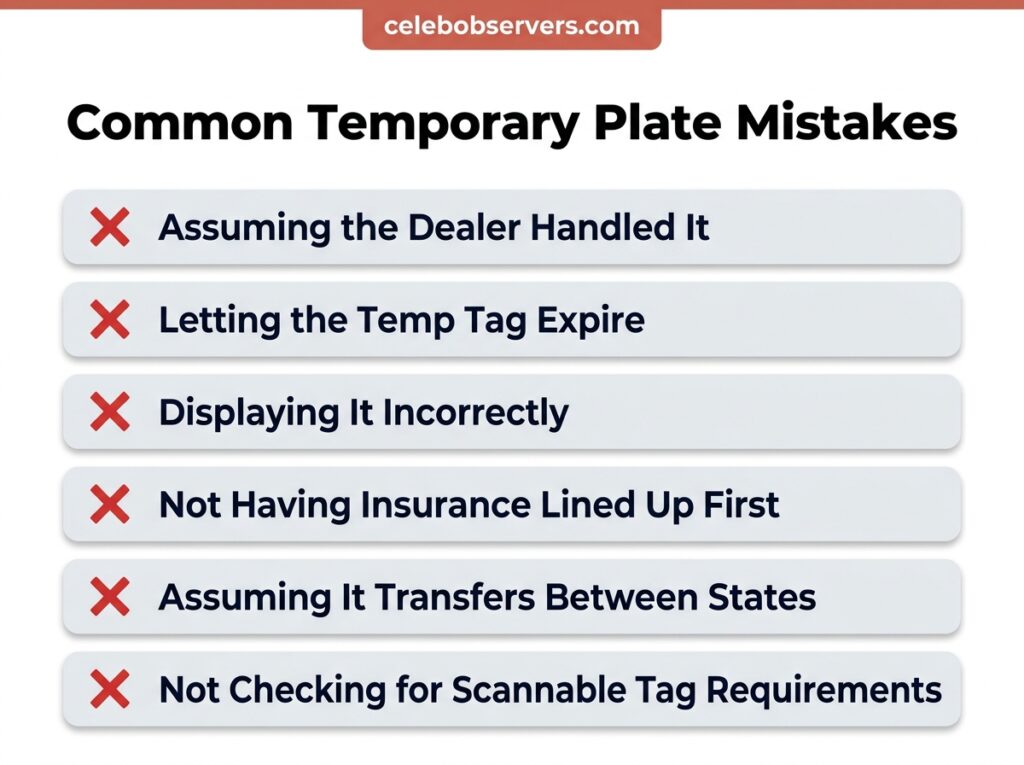
Assuming the dealer handled it. Always confirm, in writing if possible, whether the dealer is issuing your temp tag or whether that’s on you.
Letting the temp tag expire before permanent plates arrive. If your permanent registration is delayed — due to a backlog, a missing document, or a hold on the title — most states allow you to request an extension or a second temporary tag. Don’t just keep driving on an expired one and hope nobody notices; that’s a ticket waiting to happen.
Displaying it incorrectly. A temp tag stuffed in the glovebox or taped crookedly in a way that obscures the printed information can get flagged by an officer even if it’s valid. Follow the placement instructions that come with it.
Not having insurance lined up first. This is probably the single most common holdup. You cannot get a temp tag (or permanent plates) without proof of insurance in the vast majority of states, so get that squared away before your DMV visit, not during it.
Forgetting that temp tags don’t always transfer between states. If you moved and still have a temp tag from your old state, it generally won’t be honored once you’re supposed to be registered in your new one. Don’t assume it buys you extra time across a state line.
Not checking whether their state requires a physical vs. digital/scannable temp tag. In states that have cracked down on counterfeit paper temp tags, an old-style handwritten or generic paper tag may not hold up the way it used to. If you’re unsure, ask directly whether your tag is the current valid format.
What It Costs and How Long It Takes
Costs and timelines genuinely vary by state, by whether you’re going through a dealer or the DMV directly, and by how your state structures its fees (some bundle the temp tag fee into your registration cost; others charge it separately). Rather than quote a number that might be wrong by the time you read this, here’s how to find your actual number in a couple of minutes:
- Search “[your state] DMV temporary tag fee” or “[your state] temporary registration permit cost.”
- Look for your state DMV’s official fee schedule page — most states publish these as a table you can search or scroll through.
- If you’re going through a dealer, ask them directly what they charge for the temp tag, since some dealers include it in documentation fees and others itemize it separately.
As for timing: many states issue temp tags same-day, either in person or through an online portal. Others, especially for out-of-state title transfers or replacement situations involving a lost title, can take longer because they’re waiting on a duplicate title to process first. If you’re on a deadline (say, you need to drive across the country for a job start date), call ahead and ask specifically how long your situation will take — don’t assume same-day service, especially at a county office during a busy season.
Quick Reference: What to Have Ready Before You Go
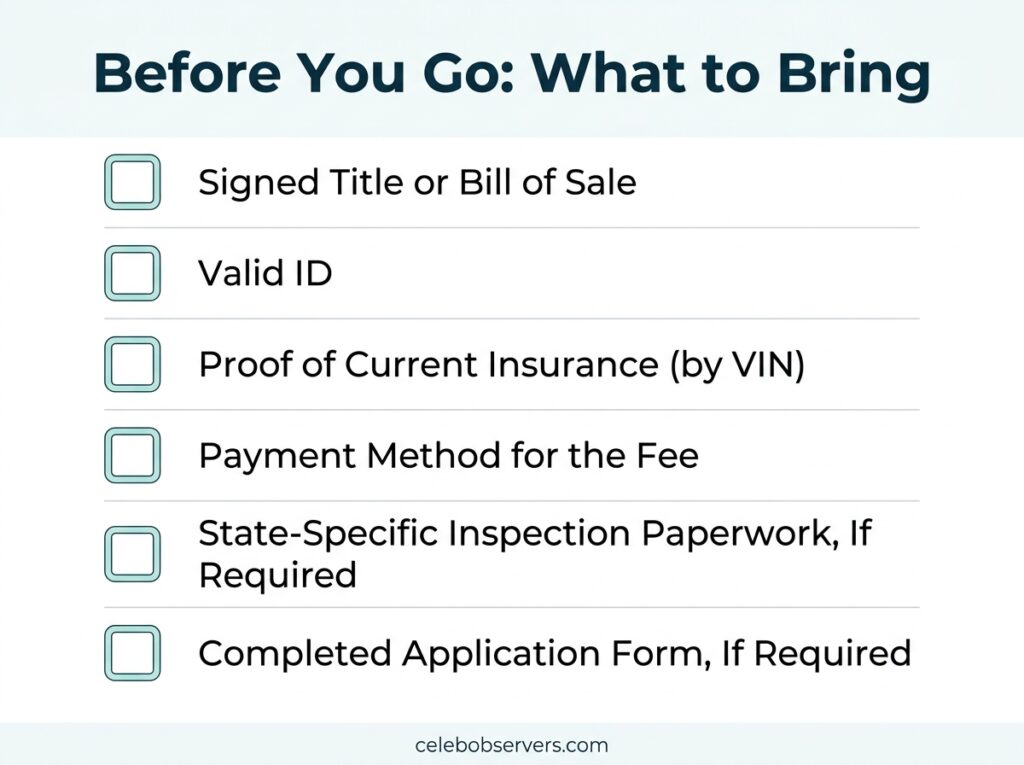
- Signed title or bill of sale
- Valid ID
- Proof of current insurance covering the vehicle by VIN
- Payment method for the fee
- Any state-specific inspection or emissions paperwork, if required
- The specific application form, if your state requires one (check if it can be filled out online first)
Having all of this in hand before you show up — whether online or in person — is genuinely the difference between a five-minute process and a wasted afternoon.
The Bottom Line
A temporary plate is just a legal bridge between buying or moving a vehicle and getting it permanently registered. The process itself isn’t complicated, but it depends entirely on getting your paperwork sequence right: insurance before registration, signed title before anything else, and a clear understanding of who’s actually issuing the tag — you, the dealer, or the state. The version of this that goes wrong is almost always a sequencing problem, not a complexity problem. Get your documents lined up in the right order, confirm your state’s specific requirements on their DMV site since these details shift over time, and you’ll be done faster than you think.
FAQ
Can I drive out of state on a temporary plate? In most cases, yes, a temp tag is generally valid for driving across state lines during its active period, since it functions as a legal registration document. That said, always check your specific state’s rules, since a few states place restrictions on interstate travel with certain types of temp permits (like short-term transport permits meant only for moving an unregistered vehicle a short distance).
What happens if my temporary plate expires before my permanent plates arrive? Contact your DMV or the dealer who issued it immediately. Most states allow you to get an extension or a second temporary tag if there’s a legitimate processing delay, especially if the delay is on the DMV’s end. Don’t just keep driving on an expired tag.
Do I need insurance to get a temporary license plate? Yes, in the great majority of states, proof of insurance is required before any registration — temporary or permanent — can be issued. Line this up before you start the paperwork process.
Is a temporary plate the same as a dealer plate or dealer tag? No. A dealer plate (or dealer tag) is a plate that belongs to the dealership itself and is used on vehicles they own for test drives or transport. A temporary plate is issued specifically to your vehicle, tied to your VIN, once you’ve purchased or are in the process of registering it.