
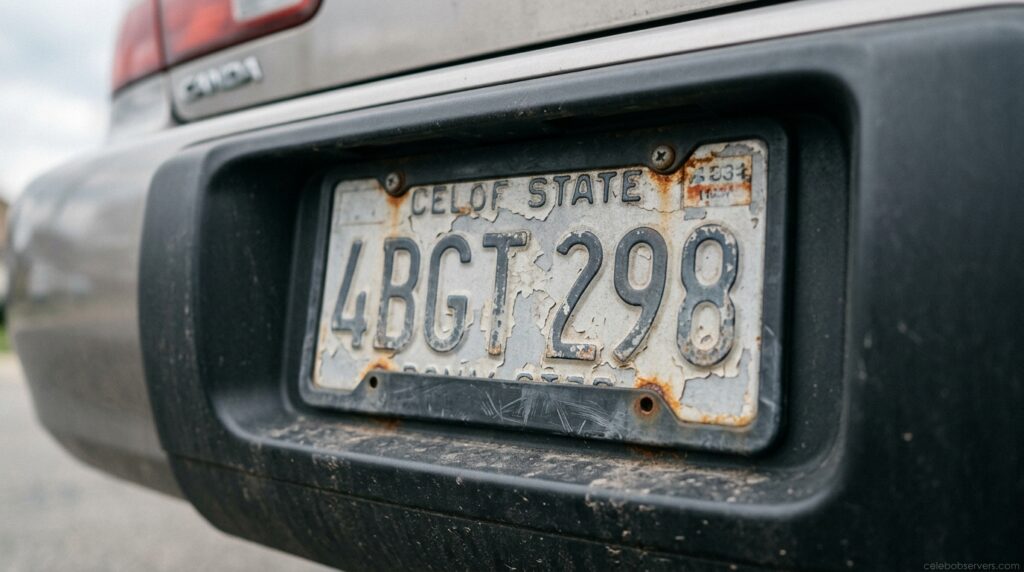
Your plate looks like it’s been through a war — the paint’s peeling, the numbers are barely legible, or a fender bender left it bent like a taco. Whatever the cause, you need a new one before a cop pulls you over for it, and you’re wondering where to even start. Good news: this is one of the more painless DMV tasks out there, and in most states you can knock it out without setting foot in an office.
I’ve replaced plates in three different states over the years — once after a plate literally rusted through in a humid coastal climate, once after a hit-and-run bent mine beyond recognition, and once because a decade of sun exposure turned my numbers into ghosts. Each time the process was a little different, but the bones of it are the same everywhere. Let me walk you through it.
Why You Need to Replace It (And Why It’s Not Optional)
A damaged or illegible plate isn’t just cosmetic. Police officers use automated license plate readers (ALPR systems) that rely on clear, high-contrast characters. If your plate is too faded to scan, you become invisible to systems designed to catch stolen cars, Amber Alerts, and toll violations — which sounds fine until you realize it also means you’re an easy target for a pull-over just to check what’s going on.
Most states have a law on the books requiring plates to be “clearly legible” from a certain distance, often around 100 feet, though the exact language and distance vary by state. Get pulled over with a plate an officer can’t read, and you’re looking at a fix-it ticket or a straight-up citation, depending on your state and how the officer wants to handle it.
Bent plates cause a different problem: they can obstruct part of the number or cover up your state’s identifying features (like a county sticker or a special validation mark), which officers can flag just as easily as fading.
Faded vs. Damaged: Does It Matter Which One You Have?
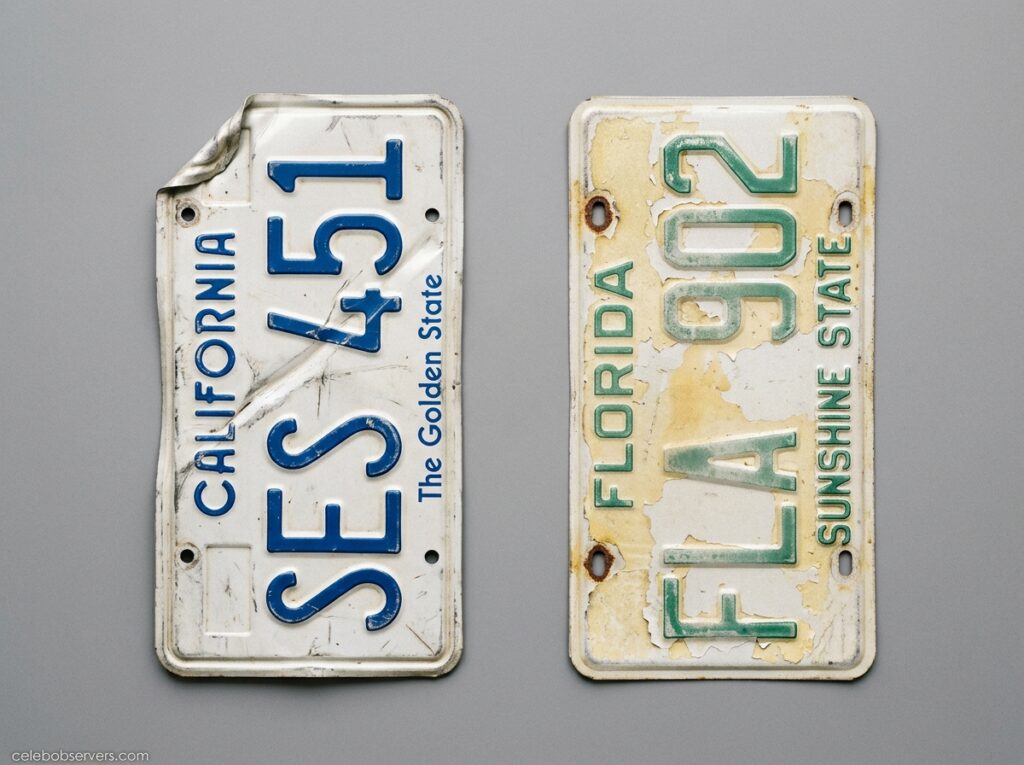
Not really, in terms of the fix — you’re getting a replacement plate either way. But it can matter in terms of why it happened, which sometimes affects what paperwork you need:
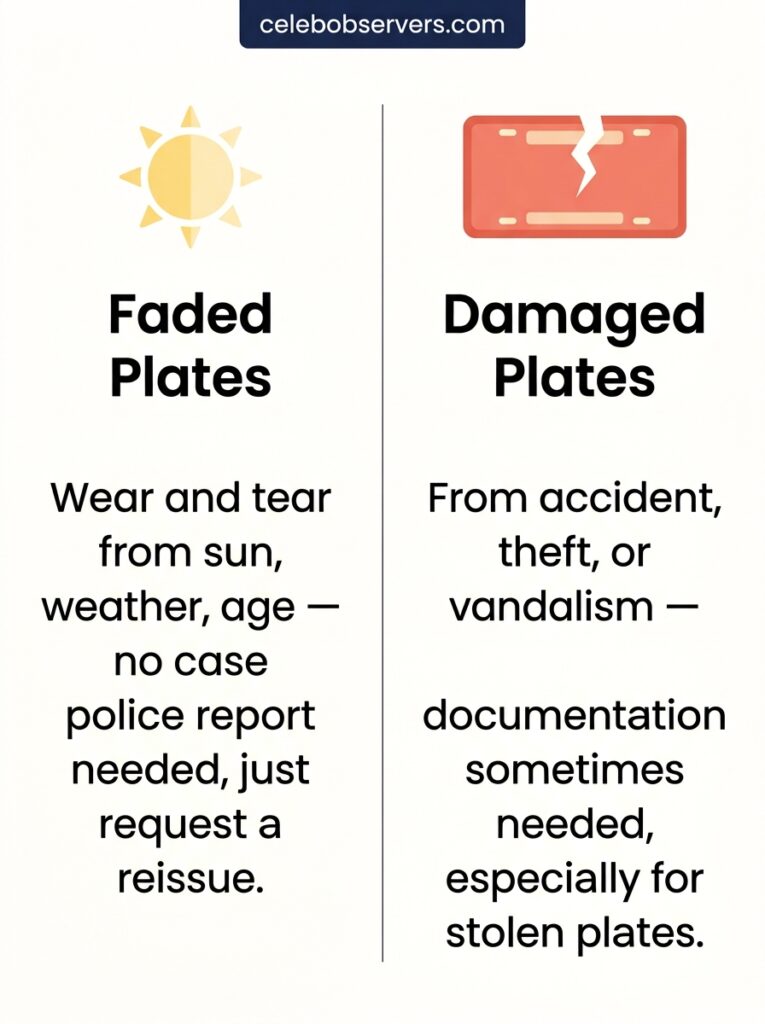
- Faded plates are usually just wear and tear from sun, weather, and age. No police report needed, no drama. You’re just requesting a reissue.
- Damaged plates from an accident, theft, or vandalism sometimes benefit from documentation, especially if insurance is involved or if the plate was stolen (in which case you may need a police report before the DMV will issue a new one — this varies by state, so check current rules).
- Bent plates from something as simple as backing into a pole usually don’t need any special documentation. You just say it’s damaged.
If your plate was stolen rather than damaged, that’s a different process in most states — often requiring a police report and sometimes a new plate number, not just a new physical plate. Don’t skip that distinction when you’re filling out paperwork or talking to a clerk.
What You’ll Need Before You Start
Gather these before you start the process, whether online, by mail, or in person:
- Your vehicle registration — has your plate number, VIN, and other identifying info.
- Proof of identity — driver’s license or state ID, typically.
- The damaged plate itself — many states require you to surrender the old plate, either by mailing it in or bringing it with you in person. Don’t toss it before checking.
- Payment method — fees vary by state and by whether you’re keeping your plate number or getting a new one entirely.
- Your vehicle’s title info — not always required, but sometimes requested to confirm ownership.
One thing people miss: if your registration is also expiring soon, some states will let you handle both at once. It’s worth checking before you make two separate trips or transactions.
How to Replace a Damaged or Faded Plate: Step-by-Step
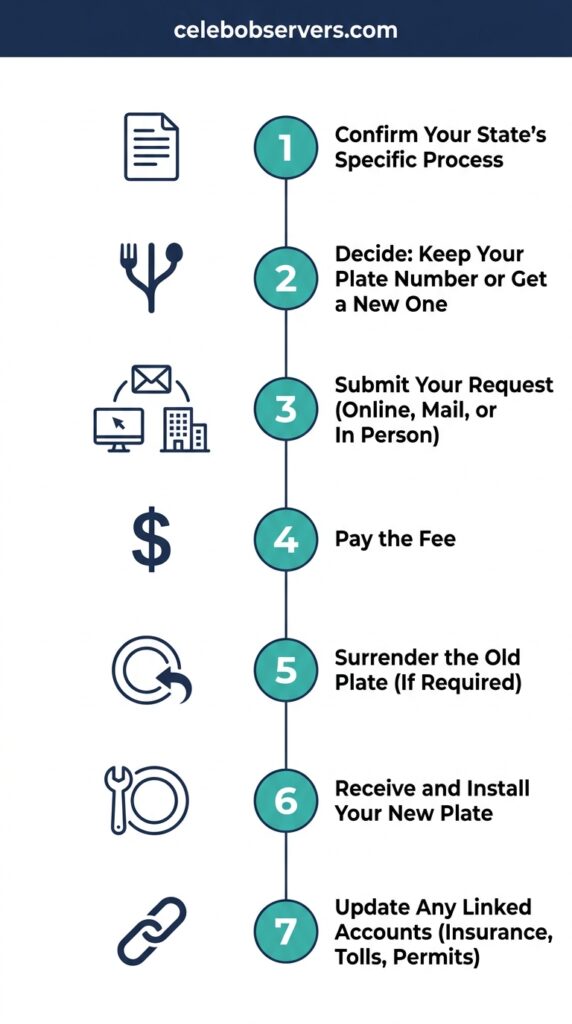
Here’s the general process. I’m laying it out as if you’re doing this online, since that’s increasingly the fastest option in most states, but I’ll flag where in-person or mail options diverge.
Step 1: Confirm Your State’s Specific Process
Every state’s DMV (or equivalent — some call it the BMV, MVD, or Department of Revenue) has its own replacement procedure. Before doing anything else, search “[your state] DMV replace license plate” and find the official state government page. Avoid third-party sites that charge a “service fee” to submit paperwork you could file yourself for less.
Step 2: Decide If You’re Keeping Your Plate Number or Getting a New One
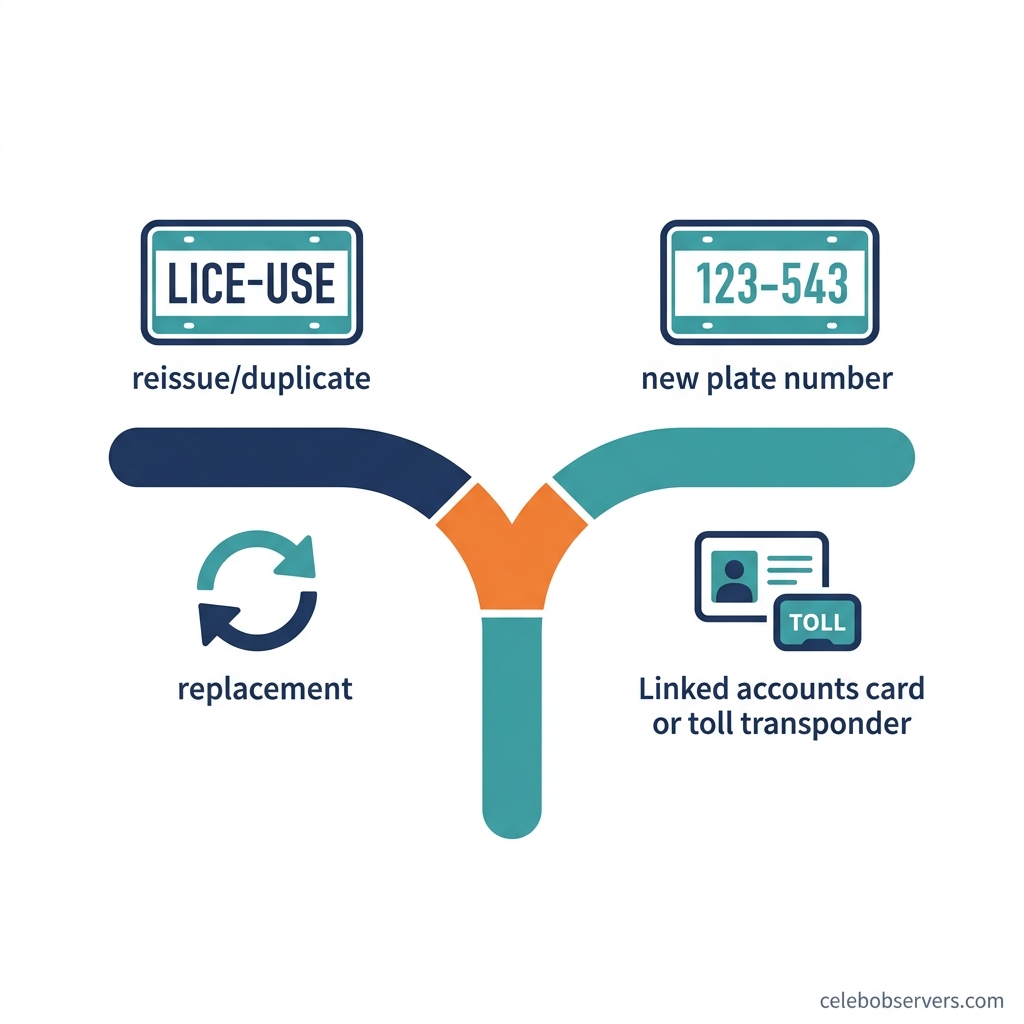
This is bigger than people expect. Some states will reissue you the same plate number on a fresh piece of metal if you’re just dealing with fading or minor damage. Others treat any plate replacement as a chance (or requirement) to issue a brand-new plate number, which means your registration, insurance card, and any toll transponders linked to that plate number need updating too.
If you like your current plate number, ask specifically whether a “duplicate” or “reissue” is available versus a full “replacement,” since states often use these terms to distinguish the two outcomes.
Step 3: Submit Your Request
Depending on your state, you’ll do one of the following:
- Online: Log into your state’s DMV portal, locate the “replace/duplicate plate” option, and follow the prompts. You’ll typically enter your plate number, VIN, and payment info.
- By mail: Fill out the relevant form (again, check your specific state’s DMV site for the correct one — form numbers and names differ everywhere), include payment, and mail it along with your old plate if required.
- In person: Bring your ID, registration, and old plate to a DMV office. This is usually the fastest option if you need the new plate immediately and don’t want to wait on mail.
Step 4: Pay the Fee
Fees vary significantly by state — sometimes by a lot, sometimes it’s a flat nominal charge. Check your state DMV’s current fee schedule online rather than relying on anything you read elsewhere, since these numbers change and vary by vehicle type, plate type (standard vs. specialty/vanity), and whether you’re keeping your existing number.
Step 5: Surrender the Old Plate (If Required)
Many states want the damaged plate back, either mailed in with your application or handed over at the counter. This is partly to prevent old plates from being reused fraudulently. If you’re doing this by mail, keep a photo of the old plate and your submission for your records, and consider tracking/certified mail so you have proof it arrived.
Step 6: Receive and Install Your New Plate
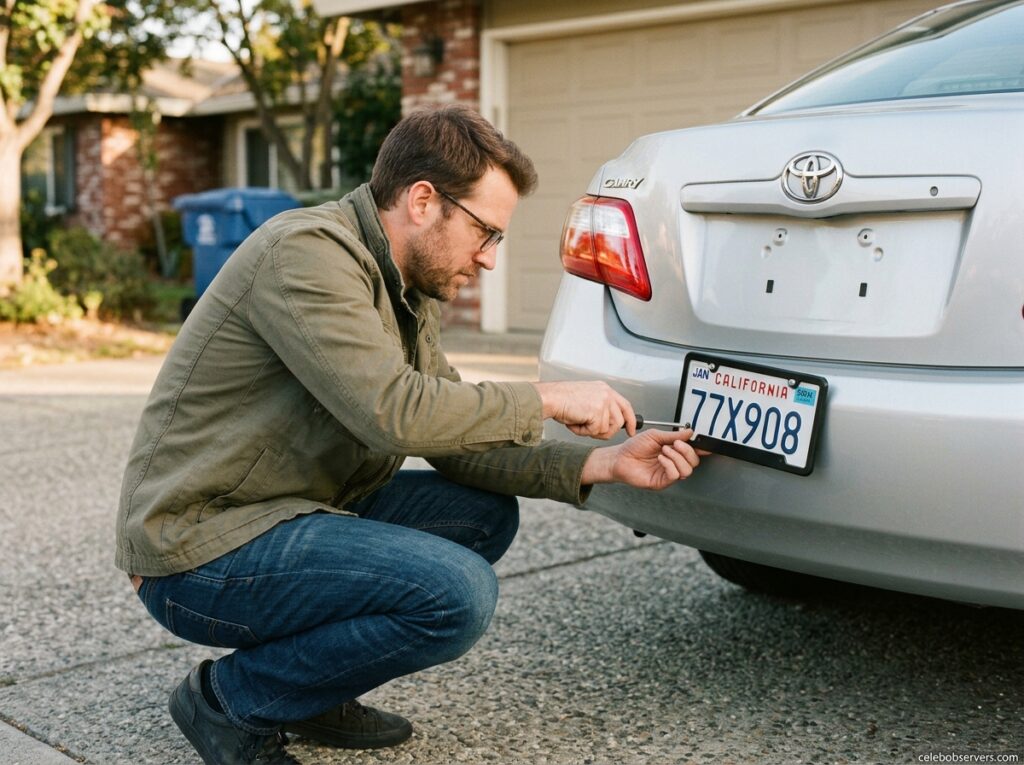
Depending on your method, you’ll get the new plate immediately (in person) or it’ll arrive by mail in anywhere from a few days to a few weeks. Once it arrives:
- Remove the old plate completely, including any old screws that might be rusted or stripped.
- Install the new plate using proper screws (don’t overtighten into a cracked plate — new plates crack more easily than you’d think if you use an impact driver).
- If your state issues a registration sticker for the new plate, apply it in the correct corner as instructed — usually indicated on the DMV’s mailer.
Step 7: Update Any Linked Accounts
If you got a new plate number (not just a duplicate of the old number), you need to update:
- Your auto insurance policy
- Any toll transponders (EZPass, FasTrak, etc.) linked to that plate
- Parking permits tied to your vehicle by plate number
- Any apps or services (some cities use plate-based parking payment apps)
This step trips people up constantly. I once forgot to update a toll transponder after a plate change and got a “plate mismatch” notice a month later — nothing serious, just an annoying letter to sort out.
Can You Replace a License Plate Online?

In most states, yes — assuming you’re just requesting a duplicate/reissue and don’t have any outstanding registration issues (like a lapsed inspection or unpaid fines) that would block the transaction. Online is almost always faster than mail and doesn’t require an office visit like in-person does.
That said, a few situations typically require in-person or mail-in handling regardless of your state:
- Stolen plates (police report requirement)
- Commercial vehicle plates
- Specialty or personalized plates in some states
- Situations where your registration itself needs updates beyond just the plate
If you’re not sure which category you fall into, your state DMV’s website usually has an eligibility checker before you get deep into the online form — use it rather than guessing.
What It Costs and How Long It Takes
I’m not going to throw out a specific dollar figure here, because fees genuinely differ from state to state — sometimes it’s a flat low fee, sometimes it scales with vehicle type or plate type, and these numbers get adjusted periodically by state legislatures. The right move is to search your state DMV’s official fee schedule (usually a PDF or table on their site) right before you start the process, since even I’ve been caught off guard by a fee changing between one renewal cycle and the next.
Same goes for timing. If you do it in person, you often walk out with your new plate the same day. Online or mail requests can range from about a week to over a month depending on your state’s processing volume and whether they’re producing a fresh embossed plate or mailing you a pre-made one. If you’re on a deadline — say, an upcoming inspection or a trip — call your local office and ask about current turnaround times, since these fluctuate with staffing and backlog.
Common Mistakes People Make
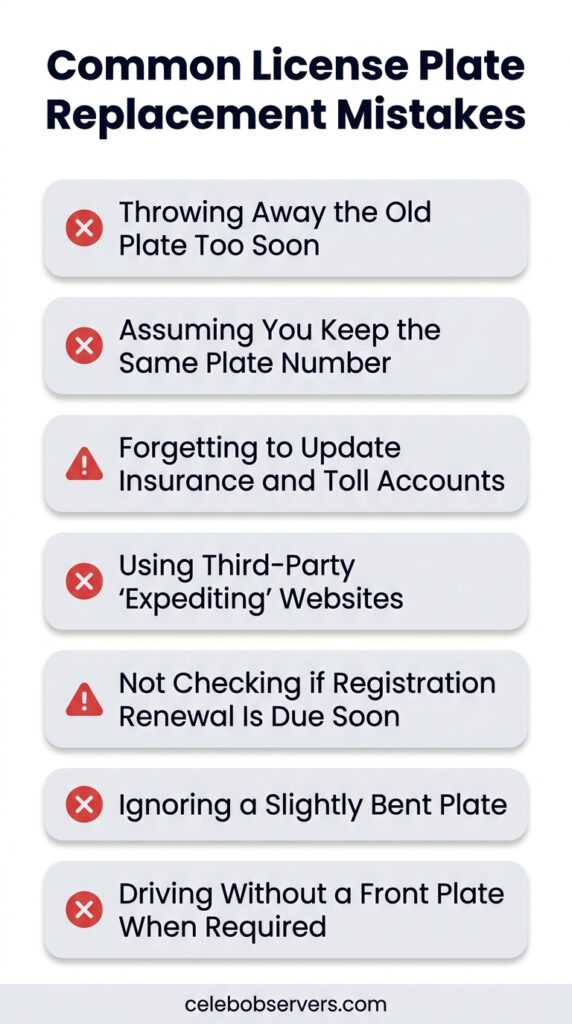
Throwing away the old plate before checking if it’s required. Some states want it back as proof you’re not planning to use it fraudulently. Toss it too early and you might need to explain its absence or pay an additional fee.
Assuming you keep the same plate number automatically. Not always true. If keeping your number matters to you — maybe it’s on a business vehicle or you just like the combination — confirm this explicitly rather than assuming.
Forgetting to update insurance and toll accounts. This is the single most common oversight. A new plate number floating around unlinked from your insurance can cause headaches down the road, especially if you’re ever in an accident and the plate on file doesn’t match your policy.
Using third-party “expediting” websites. These aren’t run by your state DMV, often charge markup fees for something you can do yourself directly on the official site, and sometimes cause processing delays because the info gets relayed incorrectly.
Not checking if inspection or registration renewal is due soon. If your registration is expiring in a month anyway, it might make sense to handle both simultaneously rather than paying two separate processing fees.
Assuming a slightly bent plate is fine to leave alone. A plate that’s bent enough to obscure a single character is functionally the same problem as a faded one — technically not “clearly legible” — and can still get you a fix-it ticket.
Driving without a front plate in a state that requires one. If your front plate is the damaged one and you remove it planning to wait for the replacement, know that some states require both front and rear plates, and driving without one (even temporarily) can be its own citation. Check your state’s rule on this before removing anything.
What If Your Plate Is Damaged in an Accident?
If the damage happened because of a collision, here’s the nuance: you generally don’t need special documentation for the DMV just to get a replacement plate — that part’s the same as a faded plate. But if you’re filing an insurance claim for the accident overall, it’s smart to photograph the damaged plate as part of your documentation before you request the replacement, especially if a claims adjuster might want evidence of all the damage sustained.
If the plate was damaged in a hit-and-run or vandalism incident and you’re filing a police report anyway, mention the plate damage in that report. It doesn’t usually change your DMV process, but it can matter for insurance purposes.
A Quick Note on Specialty and Personalized Plates
If you’ve got a specialty plate (supporting a cause, university, veteran status, etc.) or a personalized/vanity plate, replacement can work a little differently. Some states require you to reorder through the specific organization or program tied to that plate design, rather than the standard reissue process. If your damaged plate is a specialty design, check with your state DMV about whether replacement goes through the normal channel or a separate one — this is one of those details that genuinely varies enough that I won’t guess for you.
Summary: The Fast Version
If you just want the short version to act on right now: figure out if you’re keeping your current plate number or getting a new one, check your state DMV’s website for their specific online/mail/in-person process and current fees, gather your registration and ID, and don’t throw away your old plate until you know whether they want it back. Handle it online if your state allows it — it’s almost always the fastest and cheapest route. And the moment you get your new plate, update your insurance and any toll accounts tied to the old number so you don’t get a mismatch notice later.
Don’t let this sit. A citation for an illegible plate is an annoying, entirely avoidable cost, and the replacement process itself usually takes less time than the DMV trip you’re dreading.
FAQ
Do I need a police report to replace a damaged plate? Usually not, if the damage is from wear, weather, or a minor accident with your own vehicle. You typically only need a police report if the plate was stolen, or in some cases if it was damaged due to vandalism and you want that documented. Check your specific state’s requirement since this does vary.
Can I keep my same plate number after replacing a damaged plate? Often yes, through a “duplicate” or “reissue” request rather than a full replacement — but not universally guaranteed. Ask your state DMV specifically which option applies to your situation before assuming.
What do I do with my old plate after I get the new one? Check your state’s requirement first. Many states want you to surrender it (mail it in or hand it over in person), while others let you keep or dispose of it yourself. Don’t throw it away until you’ve confirmed which applies to you.
How long can I legally drive with a damaged or faded plate before replacing it? There’s no universal grace period — it depends on your state’s specific statute regarding plate legibility, and enforcement is generally up to the discretion of the officer who notices it. The safer approach is to treat it as a “fix now” issue rather than one you can put off, since you could be cited any time an officer notices it’s a problem.