
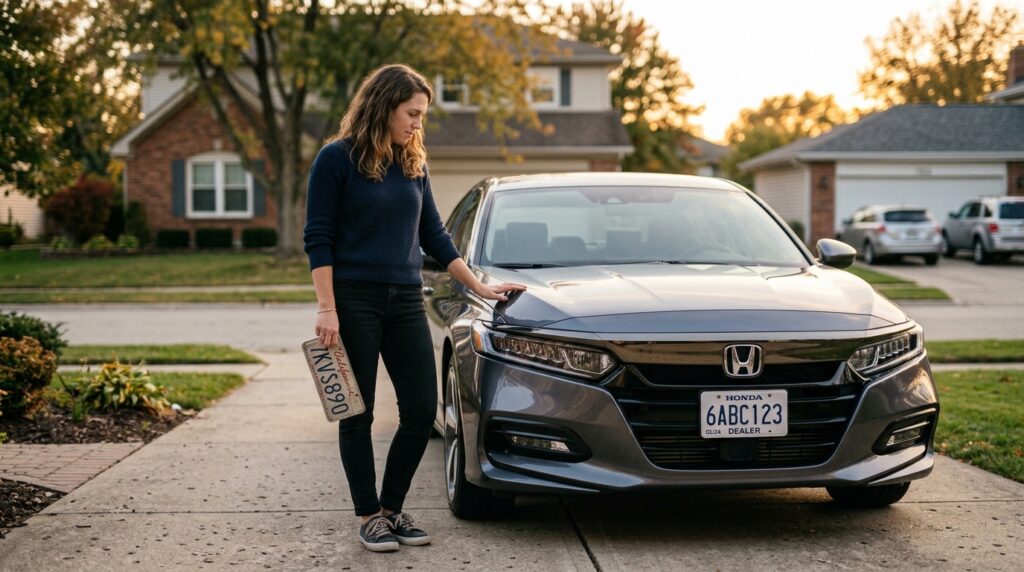
You just bought a new car, and your old plates are sitting on the passenger seat while you wonder if you actually need new ones. Good news: in almost every state, you don’t. You can move your existing plate to your new vehicle, and it usually costs less and takes less time than starting from scratch.
I’ve done this transfer more than once, in more than one state. The process is genuinely simple once you know the order of operations — the paperwork itself isn’t the hard part. The hard part is that every state does it slightly differently, and DMV websites rarely explain things in the order you actually need them. So let’s walk through it the way it really happens, not the way a form instruction sheet describes it.
Can You Even Transfer Your Plate to a New Car?
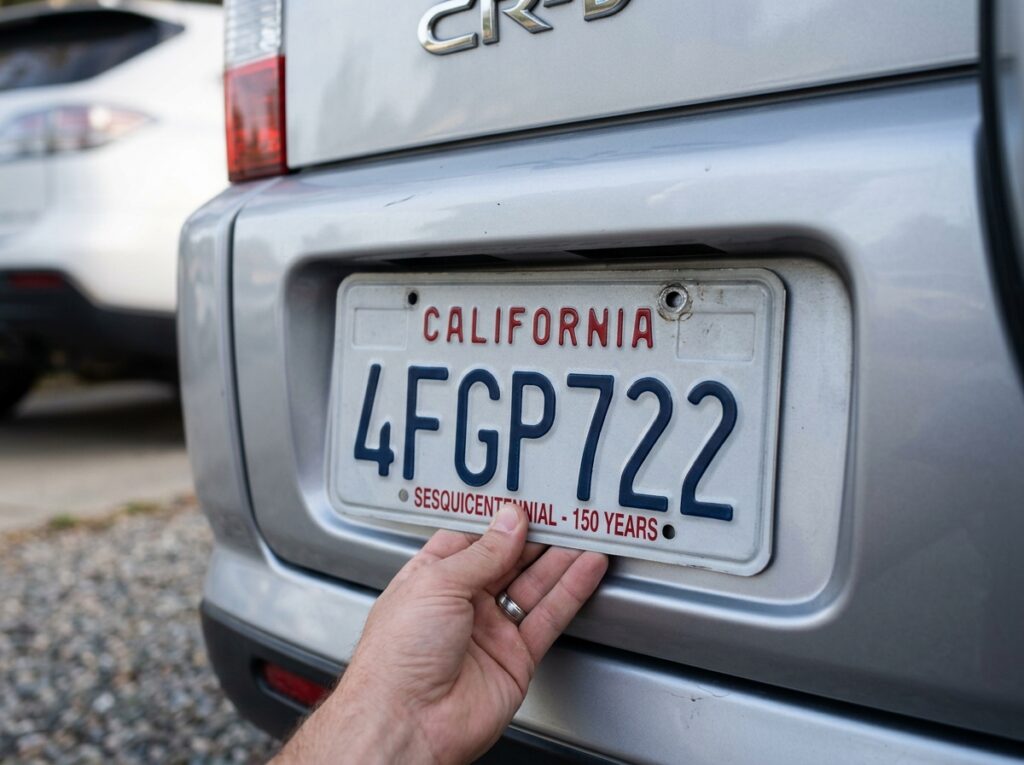
Confirm you’re eligible before you do anything else. Most states allow plate transfers, but a few conditions trip people up:
- The plate has to be registered to you (or a joint owner), not to the vehicle itself. In the eyes of most DMVs, a plate is tied to the person, not the car — which is exactly why transferring it works.
- Vehicle type sometimes matters. A passenger plate usually can’t move to a motorcycle, a trailer, or a commercial truck. If you’re switching vehicle classes (say, sedan to pickup with a different weight classification), check whether your state treats that as a different plate category.
- Specialty and vanity plates often have their own rules. Personalized plates, disability plates, and organization or charity plates can usually transfer, but some states require a specific form or a small transfer fee separate from the standard registration fee.
- The old plate can’t be expired for too long in some states. A few states won’t let you transfer a plate that’s been sitting invalid past a certain window. They’ll make you get new plates instead.
None of this is universal. Here’s the one thing I can tell you with confidence: check your state DMV’s website under “vehicle registration” or “transfer registration.” This is one of those areas states genuinely handle differently, and getting it wrong at the counter just means a second trip.
The General Process (What’s True in Almost Every State)

Strip away the state-specific quirks and the plate transfer process follows the same basic skeleton everywhere:
- You establish that you now own (or lease) the new vehicle — usually via a title, a bill of sale, or a manufacturer’s certificate of origin if it’s new.
- You provide proof of current insurance on the new vehicle. Nearly every state requires this before they’ll register any car, transferred plate or not.
- You pay the registration fee for the new vehicle, plus any applicable transfer fee, sales/use tax, and title fee.
- You surrender or update the old registration — some states literally cancel it, others just update the vehicle info tied to it.
- You get a new registration card and, sometimes, a new sticker or decal for the plate even though the plate itself doesn’t change.
Here’s the part people miss: the plate stays the same, but the registration document is brand new. You’re not “keeping your old registration” — you’re getting a fresh one that now lists your new car’s VIN, make, and model under that same plate number.
Step-by-Step: How to Actually Transfer Your Plate
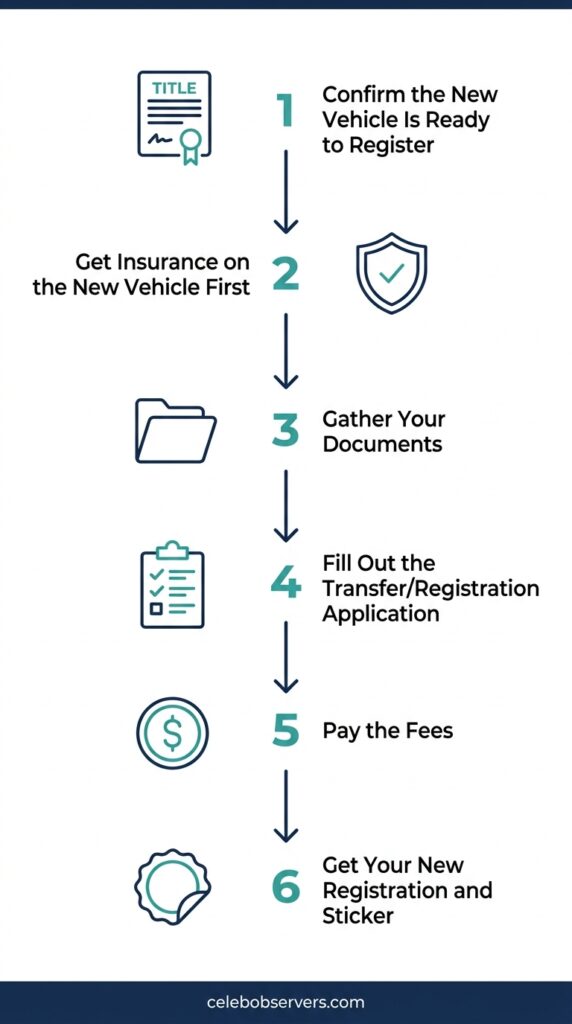
Here’s the walkthrough I’d give a friend standing in line at the DMV, minus the guesswork.
Step 1: Confirm the New Vehicle Is Ready to Register
You can’t transfer a plate to a car that isn’t titled or in the process of being titled in your name. Bought from a dealer? They usually handle the title application and may even process the plate transfer for you on the spot — ask them directly, because this varies by dealership as much as by state.
Bought privately? Make sure you have:
- The signed-over title from the seller
- A bill of sale (some states require this, others don’t — check)
- An odometer disclosure statement if the vehicle is recent enough to require one
Step 2: Get Insurance on the New Vehicle First
Do this before you go to the DMV, not after. Almost every state will refuse to process registration — plate transfer or not — without proof of active insurance on the specific VIN you’re registering. Call your insurance agent, give them the new VIN, and get an updated insurance card or digital proof before your DMV visit.
Skipping this step is probably the single most common reason people get turned away. Honestly, this part trips up more people than anything else on this list — they show up with the title, the cash, everything, and then get sent home over one missing insurance card.
Step 3: Gather Your Documents
Requirements vary, but plan to bring:
- The new vehicle’s title (or dealer paperwork if it’s still processing)
- Your driver’s license or state ID
- Proof of insurance for the new vehicle
- Your current registration for the vehicle the plate is coming off of
- The plate itself, in some states — a few actually want you to bring the physical plate in, especially if you’re switching vehicle classes or the plate type is changing categories
Step 4: Fill Out the Transfer/Registration Application
Every state has some version of a registration or transfer application form. It’ll ask for:
- Your information
- The new vehicle’s VIN, make, model, and year
- The plate number you’re transferring
- Odometer reading (for newer vehicles)
Check your state DMV site first. Most let you fill this out online in advance, or even complete the whole process online if you already have an active account and the new vehicle is titled electronically.
Step 5: Pay the Fees
This is where it gets state-specific and money-specific, so I’m not going to invent numbers. What you’re generally paying for:
- A registration fee for the new vehicle (often based on weight, value, or a flat rate depending on the state)
- A plate transfer fee, which is usually smaller than the cost of new plates
- Sales or use tax on the vehicle purchase, if it hasn’t already been collected by the dealer
- Title fee for the new vehicle
Your exact total depends on your state, your county (some states add local fees), your vehicle’s weight or value, and whether you’re also renewing registration early or late. The only reliable way to get your number is your state DMV’s fee calculator (many states have one online) or asking directly at the counter — bring your VIN and they can usually quote you on the spot.
Step 6: Get Your New Registration and Sticker
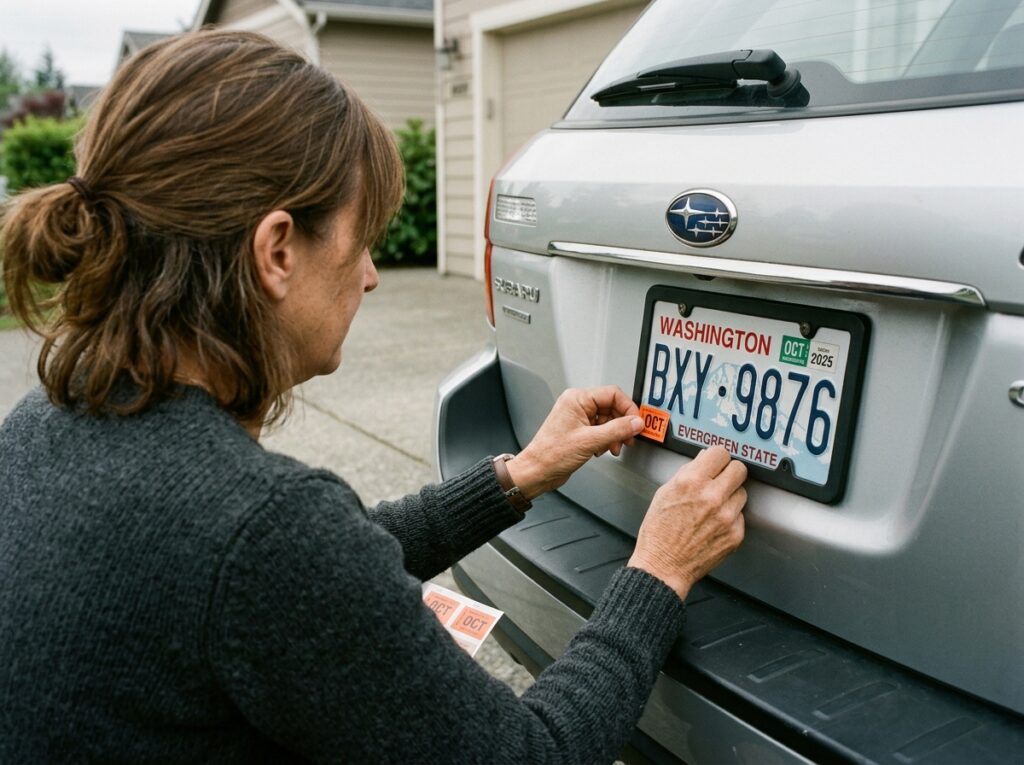
Once everything’s processed, you’ll walk out with:
- A new registration card listing the new vehicle under the old plate number
- A new registration sticker or decal for the plate, in most states, even though the plate number itself is unchanged
- Sometimes a temporary paper permit, if the plate needs mailing or you’re doing this online and waiting on physical materials
Put the new sticker on immediately. An officer running your plate will see it’s registered either way, but a missing or outdated sticker is still a common reason for a traffic stop. Don’t skip it.
Doing It Online vs. In Person vs. Through a Dealer
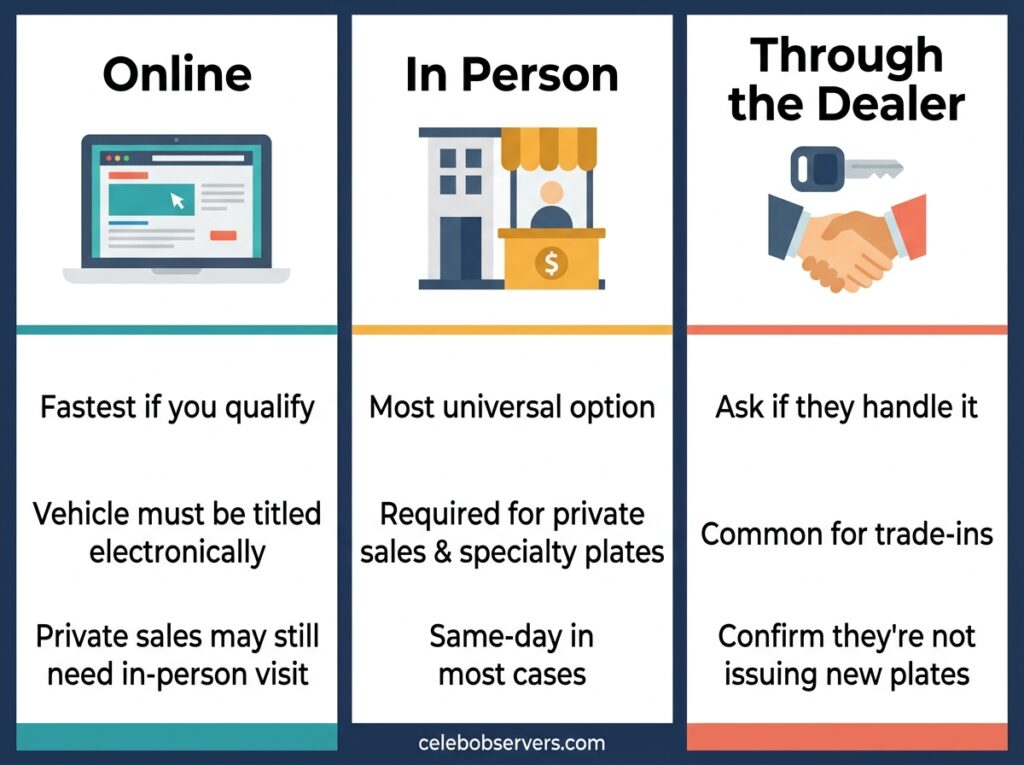
Online: A growing number of states let you complete plate transfers online if the new vehicle is already titled electronically and you have your old registration info handy. This is usually the fastest option if you qualify — but not every state offers it, and not every transaction type qualifies. Private-party sales sometimes still require an in-person visit for the title work.
In person: Still the most universal option, and often required if you’re transferring from a private sale, changing vehicle classes, or dealing with a specialty plate.
Through the dealer: Bought from a dealership? Ask them directly whether they handle plate transfers as part of the sale. Many do, especially for trade-ins, and it can save you the DMV trip entirely. Just confirm they’re transferring your existing plate and not issuing new ones by default — some dealers default to new plates unless you specifically ask to keep yours.
What About Transferring a Plate From a Car You’re Selling or Trading In?
This trips people up constantly. In most states, when you sell or trade a car, the plate does NOT stay with the vehicle — it stays with you, unless your state is one of the few exceptions that keep plates with the car. (A handful of states do this, so it’s worth checking.) That means:
- If you’re trading in at a dealer, take your plate off before you hand over the keys, unless your state requires plates to stay with the vehicle.
- If you’re selling privately, same thing — remove the plate unless local law says otherwise.
- You then either transfer that plate to your new vehicle, or, if you’re not buying immediately, many states let you hold onto it for a limited time or require you to turn it in.
Check your state’s rules here specifically. “Does the plate follow the car or the owner” is one of the more genuinely inconsistent rules across states, and it’s an easy thing to get backwards.
Common Mistakes People Make
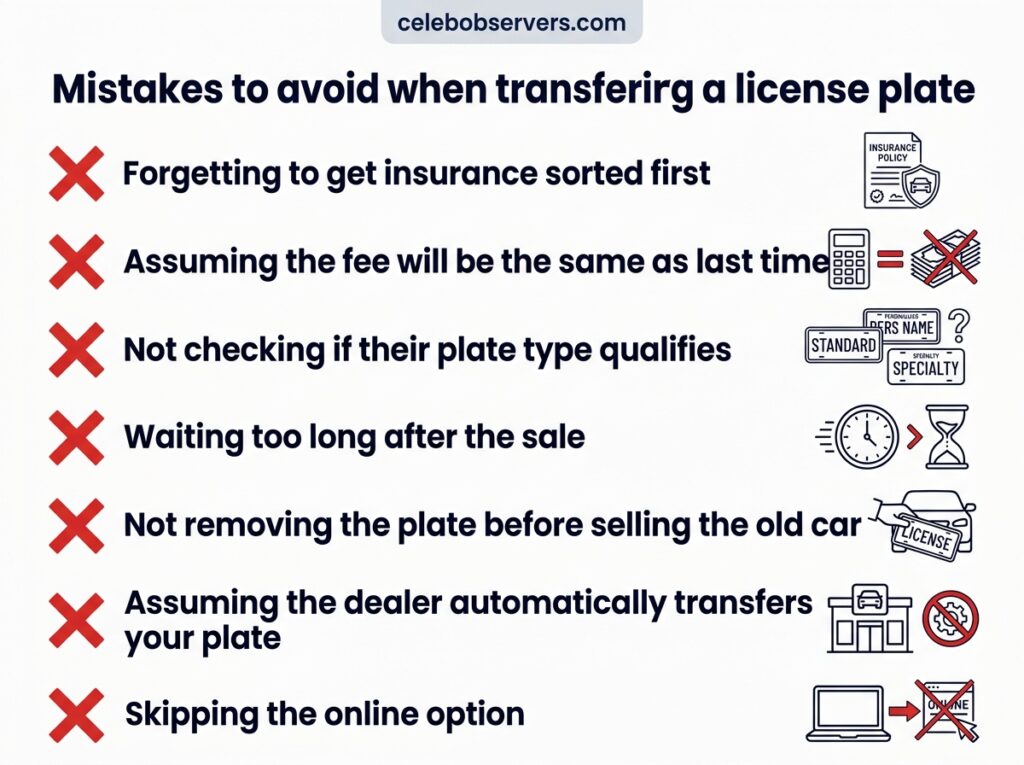
Forgetting to get insurance sorted first. This is the number one thing that sends people home without finishing the transaction. Get proof of insurance on the new VIN before your appointment or online session.
Assuming the fee will be the same as last time. It won’t necessarily be. Registration fees can be based on vehicle weight, value, or age, so your new car might cost more or less to register than your old one did, even with the same plate.
Not checking if their plate type qualifies. Specialty, personalized, and disability plates sometimes need an extra form or a separate transfer process. Don’t assume a standard transfer covers it.
Waiting too long after the sale. Most states give you a limited window (it varies) to register a newly purchased vehicle before penalties or late fees kick in. Check your state’s specific deadline — don’t guess based on what a friend in another state told you.
Not removing the plate before selling or trading the old car. Hand over your car with the plate still attached, in a state where plates stay with the owner, and you’ve just given away your registration. Nothing left to transfer.
Assuming the dealer automatically transfers your plate. Some dealerships default to issuing new plates or temp tags unless you specifically request the transfer. Speak up.
Skipping the online option because you assume it’s not available. More states offer online plate transfers now than a few years ago. Worth five minutes checking before you drive to a DMV office.
What It Costs and How Long It Takes
I’m not going to make up numbers here, because they genuinely vary by state, and sometimes by county or vehicle weight class within the same state. Here’s how to find your real numbers fast.
For cost:
- Search “[your state] DMV registration fee calculator.” Most states have one, and you plug in your VIN or vehicle details to get an exact quote.
- Look specifically for a “plate transfer fee” line item, separate from the base registration fee — some states itemize these separately, others don’t.
- If sales tax wasn’t collected at the point of sale (common in private-party transactions), factor that in separately. It’s usually the largest cost in the whole transaction, bigger than any registration or transfer fee.
For time:
- In person, most plate transfers are same-day — you walk in, get processed, walk out with new registration. Wait times depend entirely on how busy your local office is; some states let you schedule an appointment, which is worth doing if it’s an option.
- Online, processing can be instant for the registration itself. But if you need a new sticker or updated plate materials mailed, budget one to two weeks for that to arrive.
- Through a dealer, it depends on their internal process, but many can hand you temporary registration same-day while the permanent paperwork processes in the background.
Check your specific state’s DMV site for the actual deadline you have to register after a purchase. This is genuinely time-sensitive and varies by state, and some states charge penalties that increase the longer you wait.
Quick Reference: What to Bring With You
- New vehicle title or dealer paperwork
- Driver’s license or state ID
- Proof of insurance on the new vehicle (get this first)
- Current registration for the vehicle the plate is coming off
- The plate itself, if your state requests it
- Payment method for fees and any taxes due
- Bill of sale, if required in your state for private sales
The Bottom Line
Transferring your plate to a new car is one of the more straightforward DMV tasks out there, mainly because you’re not starting from zero — you’re updating an existing registration rather than creating one. Two things actually determine how smooth it goes: getting insurance squared away before you show up, and knowing whether your specific plate type and vehicle type qualify for a standard transfer. Everything else is just paperwork and a fee that your state’s online calculator can tell you in advance.
Do those two things first. The rest usually takes less time than people expect.
FAQ
Do I have to transfer my plate, or can I just get new ones?
You’re not required to transfer an existing plate — you can always choose new plates instead. Transferring is usually cheaper and faster, since it skips the cost of issuing a brand-new plate. But if your current plate has cosmetic damage or you just want a fresh one, getting new plates is a completely valid choice too.
Can I transfer my plate if I’m moving to a different state?
No. License plates are state-specific, and moving to a new state means you’ll register your vehicle there and get new plates for that state. Your old plate has to be surrendered or returned according to your previous state’s rules, which you should check directly with that DMV.
What happens to my old plate’s registration sticker when I transfer to a new car?
It gets replaced. Even though the plate number stays the same, most states issue a fresh registration sticker tied to the new vehicle’s registration period, so make sure to swap it out once you get the new one.
Can I drive the new car with the old plate before I finish the transfer?
Generally, no — not legally. The plate needs to be registered to the specific vehicle you’re driving. Some states issue a temporary permit or allow a short grace period while paperwork processes, but don’t assume this without checking. Driving an unregistered vehicle can still get you a ticket, even if you technically own the plate.