
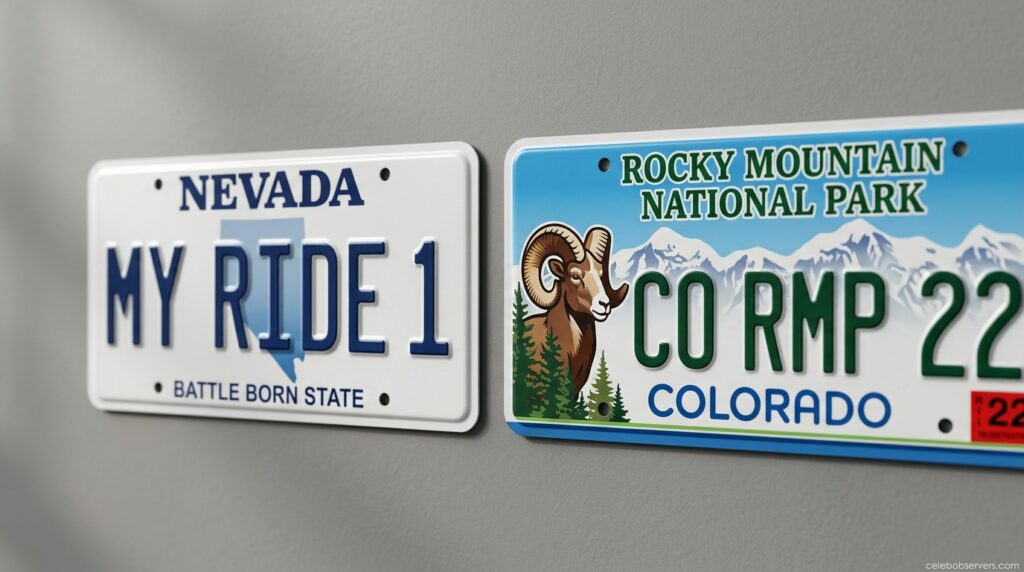
You’re staring at a DMV form trying to figure out if you want a “personalized” plate or a “specialty” plate, and nobody’s explained the difference in plain English. They’re not the same thing. Personalized plates and specialty plates solve different problems, cost different amounts, and go through different approval processes. Mix them up and you’ll either pay for the wrong thing or wait weeks for a plate that doesn’t do what you wanted.
I’ve walked friends and family through this exact confusion more times than I can count, and the DMV paperwork rarely explains it well. Let’s actually clear it up.
The Short Answer
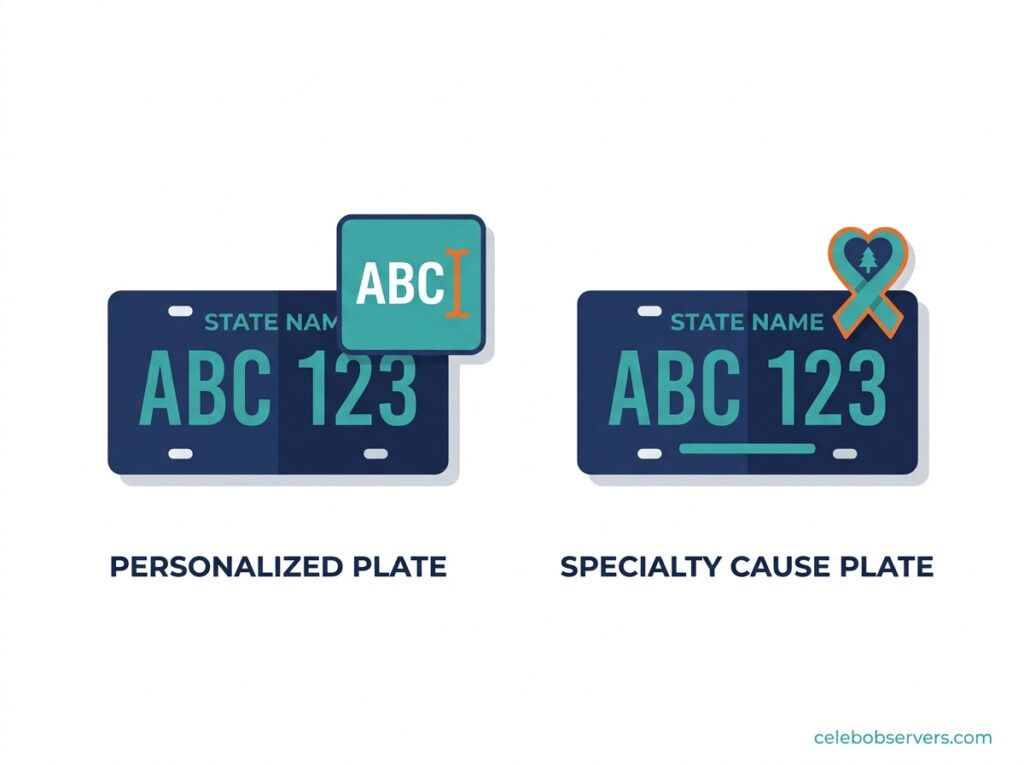
A personalized plate (also called a “vanity plate”) lets you choose the letters and numbers on your plate — like “DRVFAST” or “LUV2SKI” — instead of getting a random combination assigned by the state.
A specialty plate changes the design of the plate itself: the background image, the colors, the organization or cause it represents (a university, a veterans group, “Choose Life,” a state park fund). The letter/number combination is usually still randomly assigned unless you add personalization on top.
Here’s the part that trips people up: these two things aren’t mutually exclusive. In most states you can get a specialty plate design and personalize the characters on it — a state park background with your custom “HIKELIF” lettering, for instance. That combo usually costs more than either option alone, since you’re stacking two separate fees.
Personalized Plates, Explained
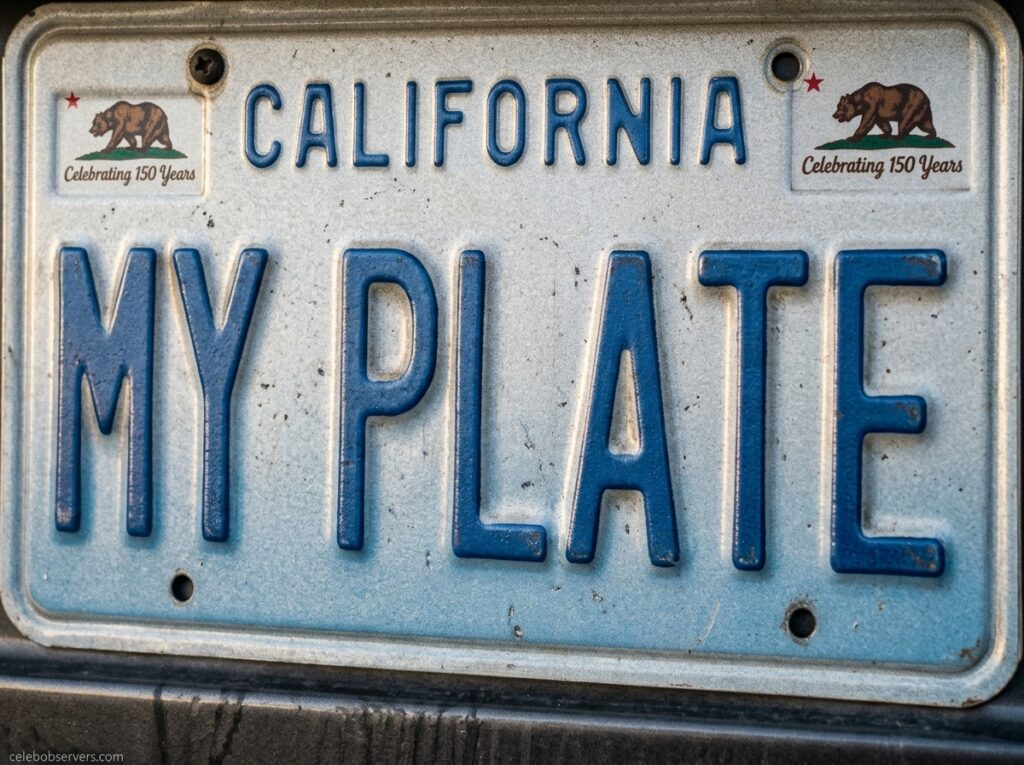
When you personalize a plate, you’re paying for the privilege of choosing your own character combination on your state’s standard plate design — the default one most vehicles in your state have. You’re not changing the artwork. You’re changing the text. That’s it.
Most states cap personalized plates at somewhere between 6 and 8 characters, though this varies, and some states allow spaces, hyphens, or a limited set of symbols. A few states allow slightly longer combinations on certain plate types, like motorcycle plates, which are physically smaller, or organizational plates. Don’t assume your state’s limit. Check your state DMV’s personalization page — it almost always has a character-count rule and a list of banned content categories.
How Approval Works
Every state runs your requested combination through some kind of review — sometimes automated, sometimes a human reviewer, often both. They’re screening for:
- Profanity or obvious innuendo (including creative spelling and leetspeak substitutions)
- References to drugs, violence, or hate speech
- Anything that could be read as a threat
- Combinations that are too close to existing government or law enforcement codes
- Sometimes: religious or political statements, depending on the state
Rejections happen more often than you’d think. Honestly, this is the part that surprises people most — reviewers reject combinations you’d swear are totally innocent. A word that means nothing to you might mean something entirely different in another language, in another region’s slang, or in a context you’ve never encountered. If your first choice gets rejected, most states let you submit alternate choices on the same application, which saves you from restarting the whole process.
Renewal
Personalized plates typically renew annually or biennially alongside your regular registration, and there’s usually an added personalization fee on top of your normal registration cost — every renewal cycle, not just the first year. This surprises people who assume the “vanity” cost is one-time. It isn’t, in most places. Check your state DMV’s fee schedule to see exactly how the ongoing cost is structured, because some states charge more upfront and less on renewal, and others do the reverse.
Specialty Plates, Explained
A specialty plate swaps the design — background graphics, color scheme, often a small logo or emblem — for something tied to a cause, organization, alma mater, military service branch, hobby group, or state initiative. Many specialty plates direct a portion of the extra fee toward a specific fund: wildlife conservation, education, veterans’ services, breast cancer research. That’s a big part of the appeal. You’re not just customizing your car, you’re supporting something.
States generally offer specialty plates through a few different paths:
- State-run specialty programs — the DMV itself designs and issues plates for popular causes (state university alumni, “in memory of veterans,” environmental funds).
- Sponsored/nonprofit-partnered plates — an organization petitions the state to create a plate, often needing to hit a minimum number of pre-orders or reservations before the state will actually produce it.
- Personalized specialty combos — the specialty design with your chosen lettering added on top.
Eligibility Requirements
This is where specialty plates get complicated. Some require proof of eligibility before the state issues one:
- Military/veteran plates often require discharge paperwork (like a DD-214) or proof of current service status.
- Disability plates or placards require medical certification from a licensed provider.
- Alumni or affiliation plates sometimes require a membership card or proof of enrollment/graduation — though many states don’t actually check this and issue on the honor system.
- Firefighter, first responder, or professional plates frequently require employer verification or a professional license number.
If your specialty plate falls into one of these categories, budget extra time for the verification step. It’s the single biggest reason specialty plate applications take longer than personalized ones — by a wide margin, in my experience.
New Plate Programs Can Take a While to Launch
Want a specialty plate for a cause that doesn’t have one yet? Some states let citizens or nonprofits petition to create a new design. This usually requires collecting a minimum number of paid reservations or a formal sponsorship application before the state commits to producing the plate. If you’re this ambitious, go to your state DMV’s specialty plate page and look for a section on “new plate applications” or “plate sponsorship.” The process and threshold vary a lot state to state.
Side-by-Side Comparison
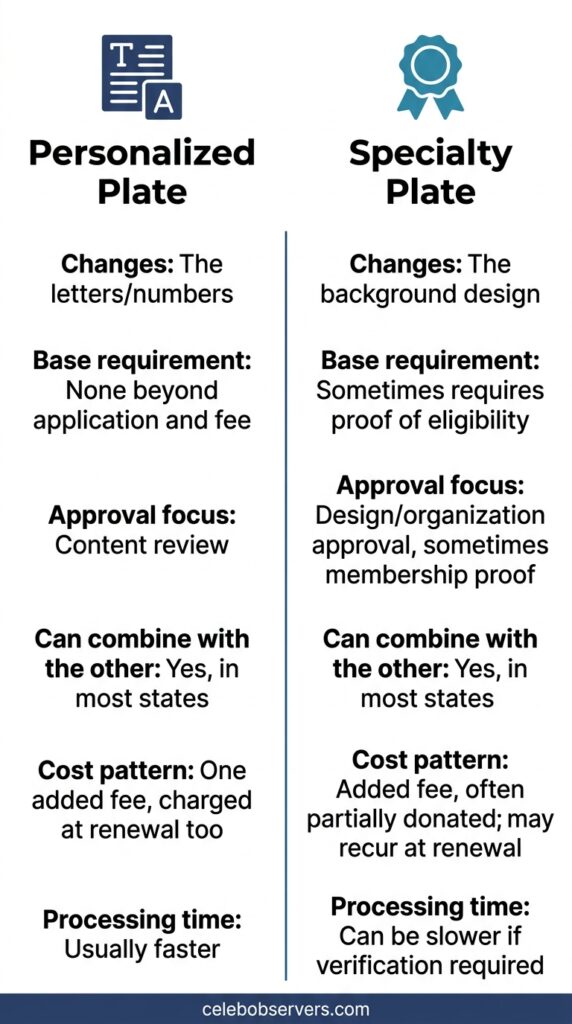
| Personalized Plate | Specialty Plate | |
|---|---|---|
| Changes | The letters/numbers | The background design |
| Base requirement | None beyond application and fee | Sometimes requires proof of eligibility |
| Approval focus | Content review (no offensive combos) | Design/organization approval, sometimes membership proof |
| Can combine with the other? | Yes, in most states | Yes, in most states |
| Typical cost pattern | One added fee, charged at renewal too | Added fee, often partially donated to a cause; may recur at renewal |
| Processing time | Usually faster | Can be slower if verification docs are required |
Step-by-Step: How to Actually Apply for Either One

Portal names differ by state, but the process looks like this almost everywhere.
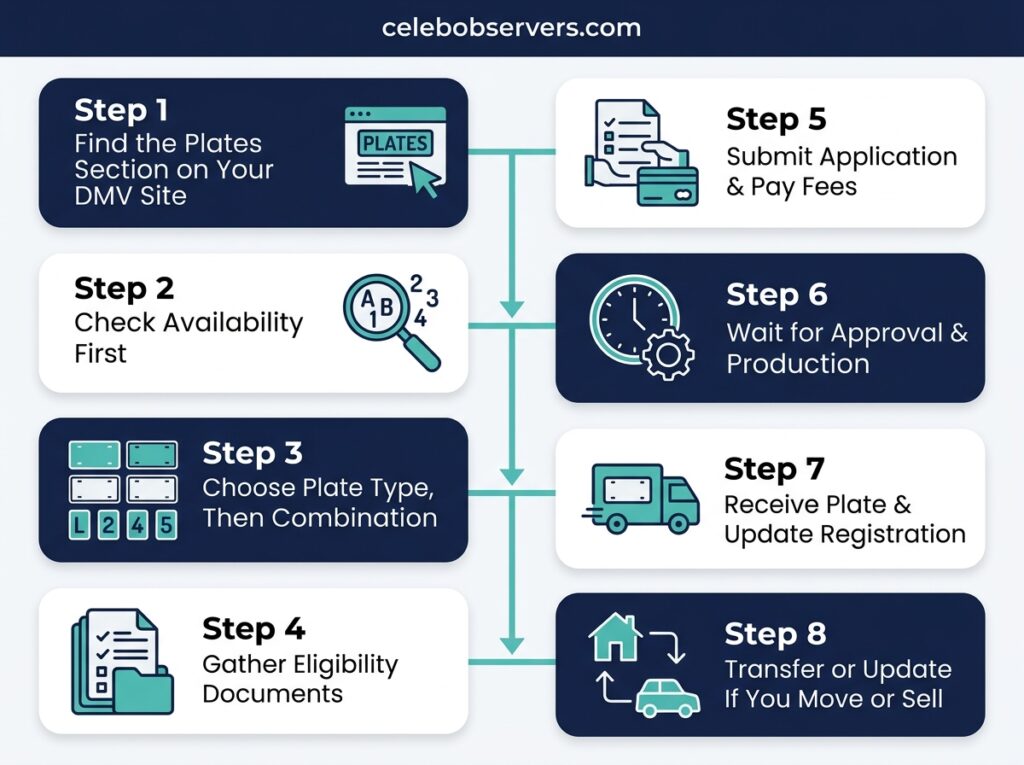
Step 1: Go to your state DMV’s website and find the plates section. Look for “License Plates,” “Specialty Plates,” or “Personalized Plates” — usually under vehicle registration.
Step 2: Check availability before you fall in love with a combination. Most states have a searchable tool where you type in your desired combination and see instantly if it’s taken or flagged as prohibited. Do this first. It saves you from a rejected application later.
Step 3: Choose your plate type first, then your combination. If you want a specialty design, pick that first — it may affect the character limit or format available for personalization on top of it.
Step 4: Gather eligibility documents, if required. Veteran discharge papers, medical certification, employer verification — whatever your plate type calls for. Scan or photograph these ahead of time if you’re applying online. This is the step most people skip, then get stuck waiting on later.
Step 5: Submit your application and pay the associated fees. Typically done online, by mail, or in person at a DMV branch — some states allow all three, others restrict certain plate types to mail-in only.
Step 6: Wait for approval and production. Personalized-only requests tend to process faster since there’s no physical redesign involved. Specialty plates — especially new designs or those needing verification — take longer.
Step 7: Receive your plate and update your registration. Some states mail the plate directly to you; others require pickup at a DMV office. Either way, double-check that your registration card reflects the new plate number. A mismatch between your plate and your paperwork can cause headaches at renewal time or during a traffic stop.
Step 8: Transfer or update if you sell your vehicle or move states. Personalized and specialty plates usually don’t automatically transfer to a new vehicle — you often have to file a transfer request. And if you move to a new state, you’ll almost always have to give up the old plate format entirely and start over with the new state’s program.
What It Costs and How Long It Takes
I’m not going to give you specific dollar figures here, because they vary enormously by state, by plate type, and by whether legislatures have adjusted fees recently. What I can tell you is the structure of what you’re likely to pay, so you know what questions to ask:
- A base registration fee — exists regardless of plate type, and isn’t something personalization or specialty plates replace.
- A one-time or annual personalization fee, if you’re customizing the characters.
- A specialty plate fee, often split between an administrative cost and a donation portion that goes to the sponsoring cause.
- A reissue or replacement fee, if you’re swapping an existing plate mid-cycle rather than waiting for your natural renewal date.
To find your actual numbers, go to your state DMV’s plate or registration fee schedule page. Nearly every state publishes this as a PDF or fee table, often searchable by plate category. Some states also have a fee estimator tool where you plug in your vehicle and desired plate type and it spits out the total.
As for timing: personalized-only plates in many states take a few weeks from approval to delivery. Specialty plates, especially ones requiring eligibility verification, can take longer — sometimes a couple of months if the plate is newly launched or in high demand. If your registration is about to expire while you’re waiting, ask your DMV about temporary registration extensions or interim plates. Most states have some mechanism so you’re not driving around with expired tags. Timelines and fee structures shift with legislative sessions, so always check current rules on your state DMV site rather than assuming last year’s numbers still apply.
Common Mistakes People Make
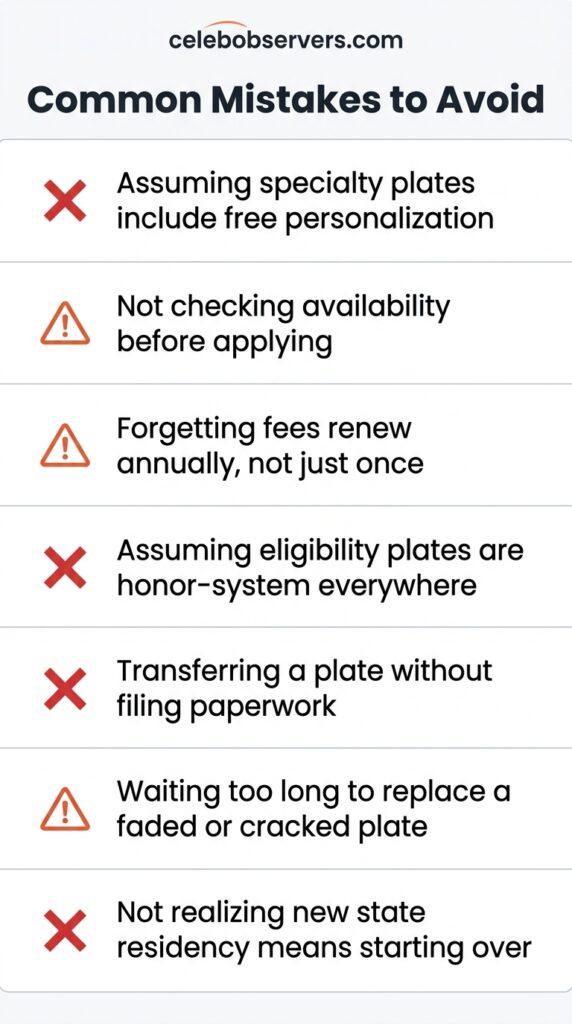
Assuming specialty plates let you pick your own letters for free. Nope — the specialty fee covers the design change. Personalization is a separate line item, even if you’re told “it comes with it” by someone who misremembered their own registration.
Not checking availability before submitting. People fall in love with a combination, fill out the whole application, pay the fee, and then get a rejection notice weeks later because someone already has it or it triggered a content flag. The search tool exists for a reason. Use it first.
Forgetting that specialty and personalized fees often both renew annually. People budget for the plate once and get blindsided at renewal when the same fees show back up on their registration bill.
Assuming eligibility-based plates are honor-system everywhere. Some states verify veteran status or professional licensing rigorously; others barely check. Don’t assume yours won’t ask for documentation. Have it ready anyway.
Trying to transfer a specialty or personalized plate to a new vehicle without filing the transfer paperwork. The plate is tied to your registration record, not automatically to whatever car it’s bolted onto. Sell your car and slap the plate on a new one without notifying the DMV, and you’ve created a registration mismatch.
Waiting too long to reorder a specialty plate that’s cracked or faded. Some states have reflectivity or legibility standards that get enforced during registration renewal or traffic stops. If your plate looks rough, look into replacement options before it becomes a problem.
Not realizing new state residency means starting over. People move states expecting to keep their beloved vanity plate. Almost universally, you’ll surrender your old plates and apply fresh in your new state, subject to that state’s own rules and availability.
Quick Summary
Personalized plates change your characters. Specialty plates change your design. You can combine them, and doing so usually costs more than either alone. Specialty plates sometimes require proof of eligibility — veteran status, medical need, professional license — while personalized plates mainly go through a content review. Fees and processing times vary by state and by plate type. Always verify current numbers on your state DMV’s official fee schedule rather than trusting a number you heard secondhand, because these figures do change.
Doing this for the first time? Start with your state DMV’s plate availability search tool. It’s the fastest way to find out what’s actually possible before you invest time in an application.
FAQ
Can I put a personalized combination on any specialty plate design? In most states, yes — but not universally, and some specialty designs have shorter character limits than the standard plate because of how the artwork is laid out. Check the specific specialty plate’s page for its character limit before assuming your desired combination will fit.
Do specialty plates expire or need renewal like regular plates? Yes. Specialty plates renew on the same cycle as your regular registration in most states, and the added specialty fee typically renews with it. It’s rarely a one-time cost.
What happens if my personalized plate request gets rejected? Most states let you submit backup choices in the same application, and if all are rejected, you can usually reapply with new combinations without losing your initial fee — though some states charge a resubmission fee, so check your state’s policy.
Can I keep my personalized or specialty plate if I move to a different state? Generally, no. You’ll surrender your old plates when you register your vehicle in a new state, then apply for personalization or specialty options through the new state’s own program, subject to their availability and rules.